
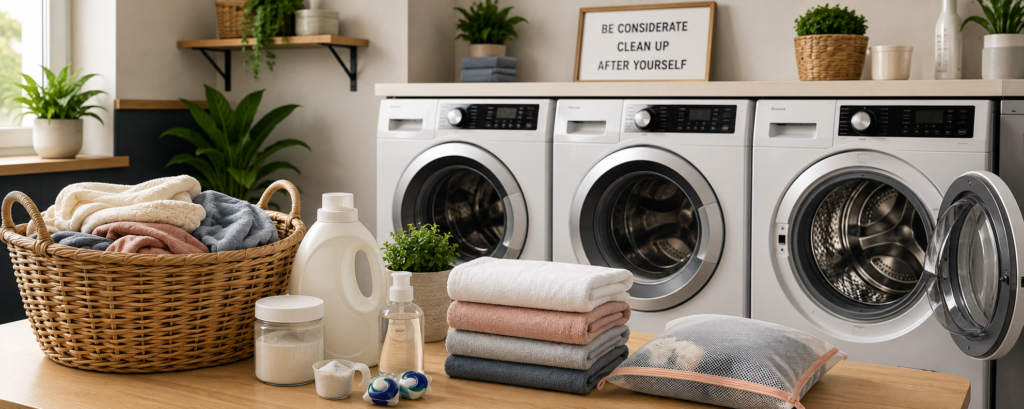
Learn simple habits that help protect your clothes, keep the laundry room organized, and avoid the most common mistakes in shared laundry spaces.
Ideal for: Apartment residents, students, families, and anyone who uses a shared laundry room.
What you’ll learn: How to protect your clothes, avoid common laundry mistakes, get the best results from shared machines, and choose products that make laundry day easier.
Living in an apartment or condo with a shared laundry room can make life much more convenient. At the same time, using machines that many people share requires a few extra precautions to keep your clothes in great condition and make the experience better for everyone.
The good news is that you don’t need to change your entire routine. A few simple habits can help protect your clothes, prevent common problems, and make every laundry trip a little easier.
Do a Quick Check Before Starting Your Load
Before putting your clothes in the washer, take a few seconds to inspect the drum.
Look for:
- Clothes left behind by another user
- Lint or pet hair
- Detergent or fabric softener residue
- Small items such as coins, tissues, or paper
- Unusual odors that could indicate the machine needs maintenance
This quick check takes less than a minute and can help prevent stains, odors, and other unpleasant surprises.
Don’t Overload the Washer
It may seem like washing everything at once saves time, but overloading the machine often leads to poor results.
When the washer is too full, water and detergent can’t circulate properly, leaving clothes less clean and putting extra stress on fabrics.
If the load feels too large, split it into two smaller loads.
Use the Right Amount of Detergent
More detergent doesn’t mean cleaner clothes.
In fact, using too much detergent especially in high-efficiency (HE) washers, which are common in the U.S., can leave residue on both your clothes and the machine.
Always follow the dosage recommended on the detergent label.
Clean High Touch Areas When Needed
If you notice visible dirt on the door handle, control panel, or detergent dispenser, wipe those areas with a disinfecting wipe before starting your load.
There’s no need to sanitize the entire machine every time you do laundry. A quick wipe of high-touch surfaces is usually enough when they appear dirty.
Remove Your Laundry Promptly
One of the most important rules in a shared laundry room is to remove your clothes as soon as the cycle ends.
Doing so helps prevent musty odors, shows consideration for other residents, and reduces the chance that someone else will need to move your laundry.
Setting a reminder on your phone is an easy way to avoid forgetting.
Don’t Forget the Dryer Lint Filter
Before using the dryer, check whether the lint filter has been cleaned.
When you’re finished, remove the lint so the dryer is ready for the next person.
This simple habit improves drying performance, helps the machine run more efficiently, and reduces the risk of dryer fires.
Sort Your Clothes Properly
Even in a shared laundry room, sorting your laundry is one of the best ways to protect your clothes.
Whenever possible, separate:
- Whites
- Colors
- Dark clothing
- Delicate fabrics
- Towels and bedding
Taking a few extra minutes to sort your laundry helps preserve colors and extend the life of your clothes.
Keep a Small Laundry Kit Ready
Having everything you need in one place makes laundry day much easier.
A basic laundry kit might include:
- Laundry detergent
- Stain remover
- Disinfecting wipes
- Mesh laundry bags
- Color Catcher® sheets
- A collapsible laundry basket or laundry tote
Keeping these items together means you’ll always be ready when it’s time to do laundry.
Choose Off-Peak Hours
If your building’s laundry room tends to get busy, try to avoid peak times such as weekday evenings, Sunday afternoons, or right after work.
You’ll have a better chance of finding an available machine and are less likely to feel rushed by other residents waiting their turn.
If your building offers a laundry reservation system, take advantage of it to make your routine even more convenient.
Follow the Laundry Room Rules
Every apartment building or condominium has its own laundry room policies.
Some have operating hours, reservation systems, or time limits for using the machines.
Knowing and following these rules helps avoid conflicts and keeps the shared space running smoothly.
Products That Can Make Laundry Day Easier
A few inexpensive items can make using a shared laundry room more convenient:
- Mesh laundry bags for delicate items
- Separate laundry bags for baby clothes
- Color Catcher® sheets
- Disinfecting wipes
- Laundry detergent pods
- A collapsible laundry basket
These products aren’t essential, but they can make laundry day easier while helping protect your clothes.
Extra Tip: Avoid Busy Laundry Times
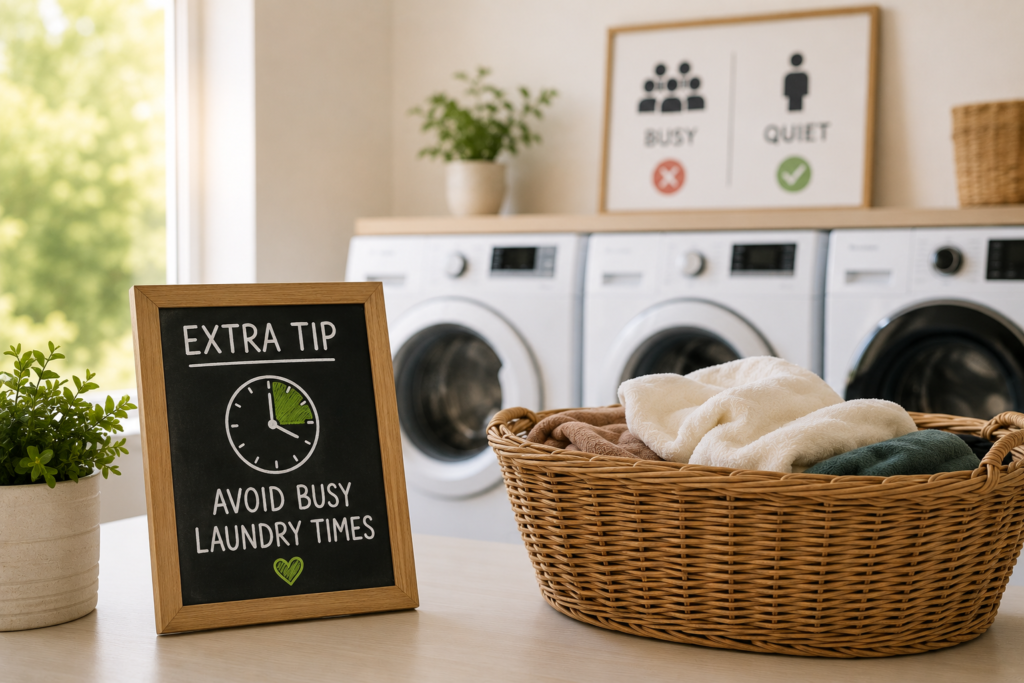
If your building’s laundry room is usually crowded, try doing laundry during quieter hours whenever possible.
You’ll spend less time waiting for an available machine and reduce the chances of someone waiting for yours to finish.
If your community offers online scheduling or reservations, use that feature to make laundry day more convenient.
Frequently Asked Questions
Is it safe to use a shared laundry room?
Yes. As long as the machines are properly maintained and used correctly, shared laundry rooms are a safe and practical option.
Do I need to clean the washer before every load?
Not necessarily. A quick inspection is usually enough. If you notice visible dirt or residue, simply wipe the high-touch areas before starting your load.
Can I wash baby clothes in a shared laundry room?
Yes. Many families safely wash baby clothes in shared machines. For extra peace of mind, make sure the washer appears clean before use and always follow the care instructions on the clothing labels.
Why You Can Trust This Article
At ElevBase, we believe practical advice should also be trustworthy. Every article is researched using recommendations from manufacturers, official organizations, and well-established industry sources. Our goal is to provide accurate, useful information that helps you make informed decisions with confidence.
Read Next