
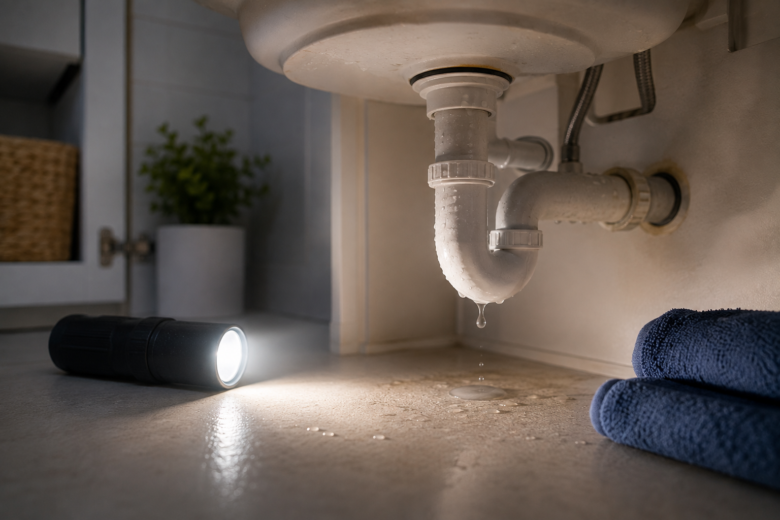
A leak doesn’t always start with water spreading across the floor.
Sometimes, it appears as a faucet that drips slowly, a toilet that starts making noise again several minutes after flushing, or a small damp spot under the sink. Because nothing seems urgent, it’s easy to put off dealing with it.
In a rental apartment, that can be a mistake.
Besides wasting water, an unnoticed leak can damage cabinets, floors, and walls. Depending on how water is billed at your property and the terms of your lease, the problem could also show up on your utility bill or create questions about damage that might have been prevented.
You don’t need to take apart plumbing to notice the early warning signs. In fact, as a renter, your most important responsibility is often to identify, document, and report the problem quickly.
Start With Faucets That Seem to Be “Just Dripping”
A dripping faucet is one of the most obvious signs of a leak, but it’s also one of the easiest to ignore.
Turn the faucet off completely and watch it for a few minutes.
Does water continue to drip?
Does the base of the faucet remain wet after use?
Is water appearing around the handles?
You can also run a dry paper towel around the base. Small amounts of water may be difficult to see but will show up quickly on the paper.
Do this for both kitchen and bathroom faucets.
Check Under the Sinks
Open the cabinet beneath each sink and temporarily remove any products that may be hiding the plumbing.
Using a flashlight, inspect:
- visible connections;
- exposed pipes;
- the bottom of the cabinet;
- corners;
- the back wall.
Look for droplets, stains, swelling, discoloration, or a damp smell.
Carefully run a dry paper towel around accessible areas. If it becomes damp, there may be a small leak even if you can’t see active dripping.
Avoid tightening connections or taking plumbing apart yourself. If you find a problem, document it and report it to maintenance.
Listen to the Toilet After Flushing
Not every leak is easy to see.
After flushing, wait for the tank to finish refilling and listen.
Does the toilet continue making running-water sounds?
Does it start refilling again several minutes later?
Can you hear water continuously running inside the toilet?
These signs may indicate that the system isn’t sealing properly.
If you suspect a problem, notify property management. Avoid taking apart internal components unless that type of maintenance is clearly permitted under your lease.
Inspect the Floor Around the Toilet
The area outside the toilet deserves attention too.
Check for water around the base, especially after normal use or cleaning the bathroom.
Does the floor stay damp?
Has the grout changed color?
Is there an unusual smell?
Recurring moisture around the base of a toilet shouldn’t be treated as normal.
If you notice it, photograph the area and request an inspection.
Inspect the Bathtub and Shower Area
After a shower, a few drops on the floor may simply have escaped past the shower curtain or door.
The concern is when water repeatedly appears in unexpected places.
Check:
- bathtub edges;
- the area around the shower;
- where walls meet the floor;
- grout lines;
- corners;
- the wall on the opposite side of the shower, when accessible.
Look for bubbling paint, stains, swollen baseboards, or areas that remain damp for an unusually long time.
Don’t try to determine the source of a suspected leak inside the wall yourself. These signs should be reported promptly.
Check Around Appliances That Use Water
If your apartment includes a dishwasher, washing machine, or refrigerator with a water dispenser, inspect the floor around those appliances.
Small amounts of water may appear only during certain operating cycles.
After using the appliance, check for moisture:
- in front of it;
- along the sides;
- near accessible connections;
- on the surrounding floor.
Don’t move heavy appliances or attempt to reach difficult connections.
If water appears repeatedly, document the problem and request maintenance.
Learn to Recognize Signs That Don’t Look Like Leaks
Sometimes, you won’t see water directly.
Instead, the apartment may begin showing other warning signs.
Watch for:
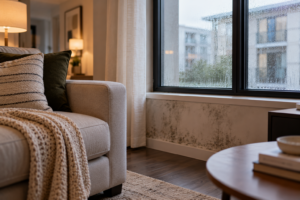
- yellowish stains on ceilings or walls;
- peeling paint;
- swollen drywall;
- warped cabinets;
- swollen baseboards;
- persistent damp or musty odors;
- flooring that has changed in appearance.
These signs can have different causes, but they deserve attention.
In an apartment building, the source of the water could even be another unit or plumbing you can’t access.
Watch for Unexpected Changes in Your Water Bill
If you receive an individual water bill, compare your usage from month to month.
A one-time increase can happen for many reasons. However, a noticeable increase without any obvious change in your routine deserves attention.
Ask yourself:
Have more people been staying in the apartment?
Have you been spending more time at home?
Are you doing laundry more frequently?
If nothing has changed and your usage increases significantly, check for signs of leaks and report anything suspicious.
If water charges are shared or calculated using another billing method, check your lease or ask property management how those charges are determined.
Document the Problem Before Trying to Fix It
When you discover a possible leak, record:
- where it’s located;
- when you first noticed it;
- photos or videos;
- how frequently it happens;
- any visible damage nearby.
Then use your property’s official maintenance request system whenever possible.
This creates a record showing that you reported the issue.
If there’s a large amount of water, an electrical hazard, or a situation causing rapid damage, follow your property’s emergency maintenance procedures immediately.
Perform a Quick Check Every Month
You don’t need to turn your apartment into a constant inspection project.
A quick monthly check can be enough.
Inspect:
- faucets;
- areas under sinks;
- toilets;
- showers and bathtubs;
- appliances that use water;
- walls and ceilings;
- floors near wet areas;
- unusual changes in water usage.
A Small Warning Sign Deserves Attention Before It Becomes a Big Problem
The difference between a minor maintenance issue and significant damage often comes down to time.
That small damp spot under the sink may not seem urgent today. But recurring moisture rarely improves by being ignored.
In a rental apartment, you don’t need to become the plumber.
You need to pay attention.
Identify the warning signs, document what you find, and report the problem promptly through the proper channels.
A few minutes of observation can protect your belongings, prevent unnecessary water waste, and keep a small leak from becoming a much bigger problem when the next bill arrives, or when it’s time to move out.

Comments
I never thought about listening to the toilet after flushing or checking under the sink with a dry paper towel. Those are such simple things, but they could probably catch a problem way before it turns into a bigger leak or a surprise on the water bill.