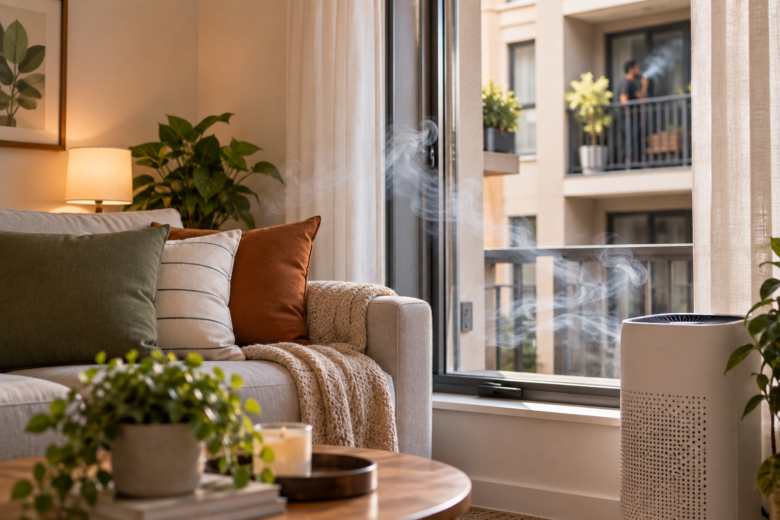
Noticing smoke inside your apartment when no one is smoking in your home can be frustrating. The odor may enter through windows, a balcony, gaps around the front door, electrical outlets, plumbing openings, or the ventilation system. In buildings with multiple units, identifying the source is not always easy because smoke can travel through hallways, ducts, and spaces inside walls.
Besides creating an unpleasant odor, the problem can interfere with sleep, remain in fabrics, and make certain rooms uncomfortable to use. Opening a window or using an air freshener may temporarily disguise the smell, but it will not stop smoke from entering.
Finding a lasting solution requires identifying the pattern, reducing possible entry points, documenting each occurrence, and communicating clearly with property management.
Identify Where the Smoke Is Entering
During an occurrence, walk through the apartment and notice where the odor is strongest. Check:
- Gaps around the front door;
- Windows and balcony doors;
- Air vents;
- Outlets on shared walls;
- Openings around plumbing;
- Kitchen and bathroom exhaust fans;
- Cabinets placed against neighboring walls.
Write down whether the odor appears when a window is open, when the heating or air-conditioning system is running, or only during certain hours. If the smell appears first in the bathroom, for example, it may be traveling through the exhaust fan or openings around the pipes.
Avoid immediately assuming that a particular neighbor is responsible. The place where smoke enters does not necessarily reveal where it originated.
Document Each Occurrence Objectively
A complaint stating only that the apartment “always smells like smoke” may be difficult to investigate. Create a log that includes:
- Date and time;
- Approximate duration;
- Rooms affected;
- Strength of the odor;
- Possible entry point;
- Window and ventilation conditions;
- Impact on your routine.
The smoke may come from cigarettes, cannabis, or another substance, but you do not need to repeat these classifications in every communication. The most important information is what is entering your unit and how frequently it happens.
If smoke is visible, take photographs or videos from inside your apartment. An indoor air-quality monitor may provide additional information, but it cannot identify the source by itself. Do not record the inside of another residence or attempt to monitor your neighbors.
Review Your Lease and Property Rules
Read your lease and the property’s community policies. Look for rules related to smoking, smoke-free areas, balconies, patios, and common spaces.
Some buildings prohibit smoking inside apartments and in designated outdoor areas. Others allow it only in specific locations. Confirm whether the rules also apply to visitors and whether smoking is prohibited within a certain distance of doors, windows, or entrances.
When submitting a complaint, refer to the relevant policy without accusing a specific person if you are uncertain about the source. This keeps the communication professional and focused on the real issue: smoke repeatedly entering your apartment.
Temporarily Reduce the Amount of Smoke Entering
While the situation is being investigated, a few measures may reduce the problem. A door draft stopper can help when the odor comes from the hallway. Removable weatherstripping may reduce gaps around windows and doors, provided it does not prevent them from opening or block an emergency exit.
Show maintenance any openings around pipes, outlets, or other areas. Do not apply permanent sealants without authorization because some spaces may need to remain accessible or properly ventilated.
An air purifier with a HEPA filter and activated carbon may help capture particles and reduce odors. Choose a unit designed for the size of the room and replace its filters according to the manufacturer’s instructions.
Never cover air vents, exhaust fans, or smoke detectors. Avoid devices that produce ozone, particularly in occupied spaces.
Contact Property Management in Writing
If the problem is recurring, submit a request through the resident portal or by email. Written communication creates a record and makes it easier to track the steps taken.
Follow these steps:
- State when the occurrences began.
- Describe the times and rooms most affected.
- Explain where the smoke appears to enter.
- Mention your log of dates and times.
- Refer to the property’s policy, if applicable.
- Request an inspection of openings and ventilation.
- Ask for a written response and a follow-up timeline.
Management may need to inspect doors, ducts, exhaust fans, hallway pressure, and spaces between units. It may also send a general reminder about the rules before contacting a particular resident.
Decide Whether Speaking With the Neighbor Is Safe
A respectful conversation may help when you know the neighbor, feel comfortable, and have a reasonable basis for believing the smoke comes from that unit. The person may not realize that the odor is traveling.
Choose a calm moment and describe the impact without making accusations. If there is a history of conflict, aggressive behavior, or any safety concern, do not make direct contact. Allow property management to handle the situation.
Continue Following Up
After submitting the first complaint, keep documenting new occurrences. If the smoke continues, reply to the earlier communication, provide the recent dates, and ask what additional action will be taken.
If no solution is offered, contact local tenant-support resources to learn which options apply in your area. Rules and tenant rights vary by lease, city, and state.
If the exposure is causing symptoms or affecting children, older adults, pregnant residents, pets, or people with respiratory conditions, seek professional guidance and tell management that a health concern exists.
Your Home Should Still Be a Place Where You Can Rest
Living in an apartment building requires some tolerance for the normal sounds and movement of nearby residents. Smoke repeatedly entering your home, however, does not have to be accepted as an unavoidable part of apartment living.
A solution may require several steps: locating the pathway, improving seals, inspecting ventilation, and reinforcing the property’s rules. Responding calmly, keeping records, and communicating in writing creates a much stronger foundation than a complaint made only in a moment of frustration.
When you close your front door, you expect to find a place where you can breathe and rest comfortably. Protecting that feeling is not an overreaction. It is part of caring for the space that should welcome you home every day.