Package security rarely receives the same attention as rent, room size, or parking availability. However, if you shop online regularly, discovering too late that deliveries frequently disappear from your building can turn an everyday convenience into a constant source of stress.
An attractive entrance or electronic access system does not guarantee that packages are protected. The real problem may be how easily strangers enter the building, the absence of a designated delivery area, or management’s failure to respond when residents report missing items.
Before signing a lease, you can investigate these risks. No single method provides complete certainty, but combining several observations can help you determine whether a building has a dependable package system or simply appears secure during a quick apartment tour.
Look at Where Packages Are Actually Left
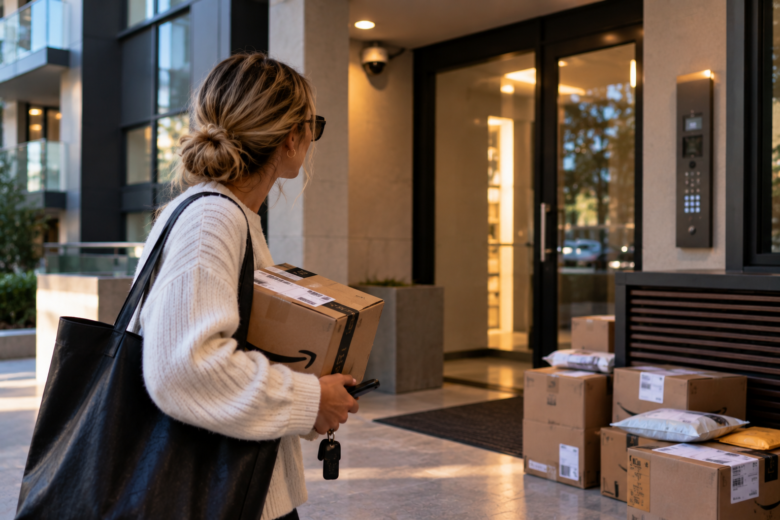
During your visit, ask exactly where delivery drivers leave packages. If possible, request to see the area instead of relying only on a verbal description.
Depending on the property, packages may be left:
- Outside the main entrance;
- On the lobby floor;
- In a shared package room;
- Behind the front desk;
- Inside electronic lockers;
- Directly outside each apartment door.
Notice whether the delivery area is visible from the street and whether anyone passing through the entrance could reach it. A disorganized pile of boxes near the door may suggest that the building does not have an effective system.
If there is a package room, confirm whether it remains locked and how residents gain access. Security cameras can be helpful, but they do not replace secure doors, controlled entry, and clear procedures.
Visit the Building at Different Times
A scheduled tour usually takes place while the leasing office is open, common areas are organized, and employees are present. The building may operate very differently at night or during the weekend.
If possible, return to the area at another time and observe the entrance without interfering with residents’ privacy. Check whether the doors close properly, whether visitors enter by following residents inside, and whether packages are sitting unattended outdoors.
The purpose is not to monitor anyone. It is to understand how the building functions when the management team is unavailable. A dependable security system should continue working after the leasing office closes.
Talk to Current Residents
Current residents are often the best source of information about problems that may not become visible during a tour. If you meet someone in a common area and the conversation develops naturally, ask a short and respectful question.
You might ask:
- Do packages usually stay safe here?
- Have you ever had a delivery disappear?
- Can delivery drivers access the building easily?
- Does management help when a package goes missing?
- Does the package room frequently become overcrowded?
One negative experience does not necessarily mean the building is unsafe. However, similar stories from several residents deserve serious attention.
Pay attention to how residents answer as well. Hesitation, visible frustration, or statements such as “it depends on the delivery driver” may reveal a less organized system than management describes.
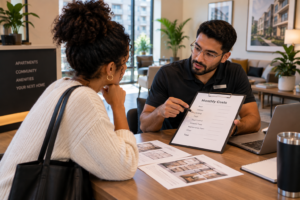
Ask Management Specific Questions
Avoid asking only whether the building is safe. A general answer such as “We have never had any major problems” does not explain how deliveries are handled.
Ask directly:
- Is there a dedicated package room?
- Who can access that room?
- Are electronic lockers available?
- Is there an additional fee for using them?
- Does the front desk accept deliveries?
- What happens when the lockers or package room are full?
- Are cameras directed toward the delivery area?
- How does a resident report a missing package?
- Does management investigate, or does it only recommend contacting the carrier?
You should also confirm whether the property charges a monthly package-management or locker fee. Any mandatory fee should be included when calculating the apartment’s actual monthly cost.
Search Reviews Using Specific Terms
Online reviews can be useful, but looking only at the property’s overall rating is not enough. A community may receive positive comments about its staff or amenities while still having repeated complaints about stolen deliveries.
Search the property’s name with terms such as:
- Package theft;
- Stolen package;
- Missing package;
- Mailroom;
- Delivery;
- Building security.
Read both recent and older reviews to identify patterns. Consider the number of complaints, how close together they were posted, and whether management responded.
A professional response does not erase the problem, but it may show whether the property recognizes the issue and has taken action. Defensive or repetitive responses that automatically blame residents can indicate that management is unwilling to help.
Evaluate the Building’s Access Control
Observe how residents, visitors, and delivery drivers enter the building. Is access managed through an intercom, entry code, mobile app, key fob, or front desk employee?
Modern technology is not automatically secure. Codes shared with too many people can spread quickly, and electronic locks provide little protection when doors are regularly propped open or fail to close correctly.
Watch for warning signs such as:
- An unlocked main entrance;
- A damaged lock;
- Residents allowing unknown people to follow them inside;
- An uncontrolled side entrance;
- Packages visible through a window;
- Missing or poorly positioned cameras;
- A package room accessible to any visitor.
The combination of these details tells you more than the presence of a single camera in the lobby.
Confirm Your Backup Delivery Options
Even in a well-managed building, a package may occasionally be left in the wrong place. Before moving in, identify alternatives for valuable or time-sensitive deliveries.
Check whether the neighborhood has carrier pickup locations, secure package lockers, or participating retail stores. You can also ask whether residents may install a doorbell camera, provided it complies with the lease and does not violate a neighbor’s privacy.
Other options include requiring a signature, activating delivery notifications, and adding detailed instructions for the driver. These precautions cannot fix a building-wide security problem, but they can provide additional protection.
Step by Step: Investigate Before Signing the Lease
1. Inspect the Delivery Area
Ask to see where packages are actually left.
2. Examine the Entrance
Check whether doors close properly and access appears controlled.
3. Return After Business Hours
Observe how the entrance functions when management is not present.
4. Speak With More Than One Resident
Look for repeated experiences instead of relying on one isolated story.
5. Search Detailed Reviews
Use terms related to packages, deliveries, mailrooms, theft, and security.
6. Ask About Management’s Procedures
Find out what happens after a resident reports a missing package.
7. Identify Additional Fees
Include mandatory locker or package-management charges in your housing budget.
8. Locate Pickup Alternatives
Know where important deliveries can be sent before you need another option.
Real Security Shows Up in the Daily Routine
No apartment building can promise that a package will never disappear. What separates a prepared property from a careless one is the presence of meaningful safeguards: controlled access, protected delivery areas, clear procedures, and a management team that responds when something goes wrong.
Investigating these details may seem minor compared with the other decisions involved in moving. But imagine spending an entire year redirecting deliveries, requesting refunds, and worrying about every notification that says your package has arrived.
The best choice is not the building that simply claims to be secure. It is the one that can show you how it protects something delivered in your name, even when you are not home.