In a small apartment, a few poorly used inches can quickly make a difference.
Your kitchen cabinets may seem full even though there’s unused space between shelves. The closet may have only one clothing rod with no efficient divisions. Cleaning supplies end up on the floor because they don’t have a designated place. Meanwhile, doors, cabinet interiors, and areas under furniture remain almost completely unused.
Your first thought may be that you need more cabinets.
But adding custom built-ins isn’t always necessary to gain usable space.
A few removable accessories can help you make better use of areas you already have, creating additional storage without making major changes to the property. For renters, there’s another advantage: many of these solutions can move with you to your next home.
The key is to use your existing space more efficiently before adding more furniture to the apartment.
Before Buying Organizers Find Out Where Space Is Being Wasted
Don’t start by buying baskets and storage bins.
First, look around each room and identify underused areas.
There may be available space:
- above existing shelves;
- under the bed;
- behind doors;
- inside cabinet doors;
- under the sink;
- on the upper shelf of a closet;
- between poorly stacked items.
Take pictures and measure these areas.
An organizer only increases usable space when its dimensions actually fit the area where you plan to use it.
Add Extra Shelves Inside Cabinets
One of the most common storage problems happens between shelves.
Imagine a kitchen cabinet where a stack of plates uses only half the available height. Stacking everything to the top isn’t practical, but leaving that space empty doesn’t help either.
Freestanding shelf risers can create a second level without requiring permanent installation.
They can work well for:
- plates;
- mugs;
- food containers;
- pantry items;
- bathroom products.
Before buying one, measure the cabinet’s width, depth, and interior height.
The goal is to create useful levels, not add an accessory that makes existing items harder to reach.
Use the Inside of Doors
Doors can provide additional storage without taking up more floor space.
Over-the-door organizers and other door-mounted solutions can help store smaller, lightweight items.
Depending on the location, they may work for:
- accessories;
- toiletries;
- cleaning supplies;
- small household items.
Some organizers hang directly over the top of a door, while others use adhesive mounting systems.
In a rental, always check the manufacturer’s instructions and your property’s rules before using adhesive products.
Also make sure the organizer doesn’t prevent the door from closing properly.
Turn the Space Under Your Bed Into Storage
The area under your bed can provide a surprising amount of storage.
Low-profile containers designed for this space can hold items you don’t need every day.
Consider using them for:
- seasonal clothing;
- extra bedding;
- shoes;
- bags;
- occasionally used belongings.
Choose containers that protect their contents from dust and can be pulled out easily.
And always measure the available height before buying anything.
Few things are more frustrating than discovering that a storage container is just one inch too tall to fit under your bed.
Create More Levels Inside the Closet
A small closet may actually have enough space but an inefficient layout.
If there’s only one clothing rod, for example, a large amount of space may remain unused beneath shorter garments.
Hanging organizers, dividers, and removable additional rods can help create new storage zones.
The key is to organize the closet according to what you’re storing.
Long clothing needs vertical space.
Shirts and pants may allow you to use that height more efficiently.
Shoes require a different setup.
Don’t try to fill every inch. An efficient closet still needs to let you see, reach, and remove your belongings easily.
Use Pull-Out Organizers in Deep Cabinets
Deep cabinets offer plenty of space, but part of that space can become almost invisible.
If you need to remove five products just to reach something in the back, the storage technically exists, but it isn’t working efficiently.
Pull-out bins and sliding organizers can make those areas easier to access.
They’re especially useful:
- under sinks;
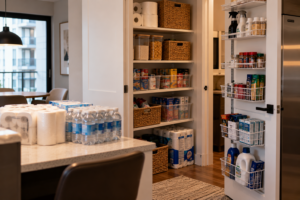
- inside pantries;
- in bathroom cabinets;
- for cleaning supplies.
Before placing an organizer under a sink, check where the pipes are located.
Measure the space that’s actually available around the plumbing instead of relying only on the cabinet’s overall dimensions.
Use Dividers to Make Drawers More Efficient
A large drawer may look spacious until small objects begin mixing together.
Adjustable dividers can create designated areas without requiring you to replace the furniture.
They can work for kitchen utensils, accessories, office supplies, or toiletries.
The benefit isn’t only visual.
When every object has a defined place, it’s easier to see what you already own and avoid covering other surfaces with things that could be stored inside the drawer.
Think Vertically Before Taking Up More Floor Space
In small apartments, adding shelving units and drawer cabinets can solve one storage problem while creating another: less room to move around.
Before adding another piece of furniture, look for ways to use the vertical space you already have.
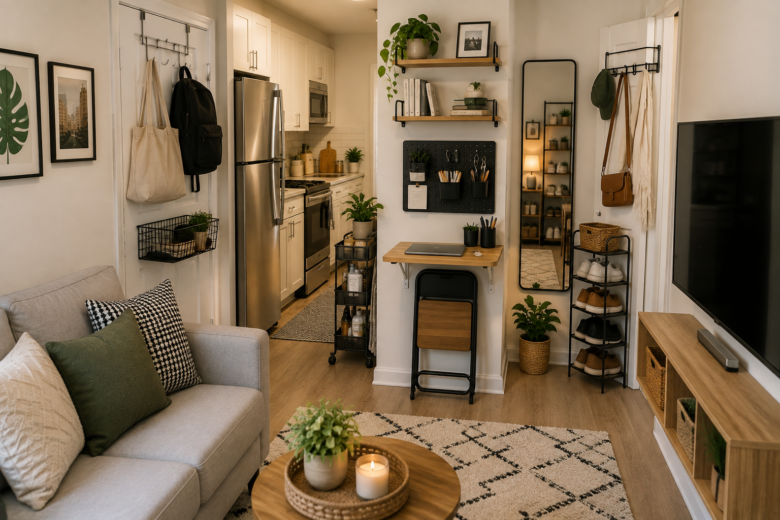
Stackable organizers, shelf risers, and hanging systems can increase storage capacity without significantly increasing the amount of floor space being used.
But there is a limit.
Overstacking can make items difficult to reach and create instability. Always follow the manufacturer’s weight and assembly recommendations.
Don’t Buy Organizers Before Measuring
A storage accessory isn’t automatically a space-saving solution.
If it’s too large, it can waste space. If it’s too small, it may not solve the problem.
Before buying, write down:
- width;
- depth;
- height;
- existing obstacles;
- dimensions of the items being stored.
Buy each organizer for a specific need.
Avoid purchasing sets simply because they look useful.
Use This Checklist Before Adding More Furniture
Before deciding you need another cabinet, check whether you’ve already used:
- vertical space inside cabinets;
- the inside of doors;
- the area under the bed;
- unused closet space;
- the full depth of cabinets;
- drawer dividers;
- appropriate stackable organizers;
- removable solutions allowed by your lease.
More Space Doesn’t Always Mean Putting More Things in Your Apartment
When an apartment starts feeling small, buying another storage unit can seem like the obvious solution.
But every new piece of furniture takes up space too.
Before adding something else to the floor, look at what you already have.
There may be an underused shelf, a door serving no storage purpose, or an entire hidden area beneath your bed.
The best organizing accessories don’t magically make an apartment larger.
They do something smarter: they turn spaces that were already there into areas you can finally use.
And for renters, there’s another advantage that’s hard to ignore. When your next move comes, many of these solutions can come with you, leaving the walls intact and helping you make much better use of your space while you live there.