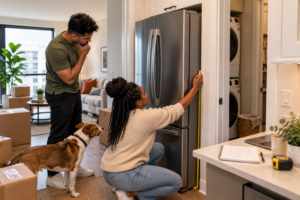
Buying products in bulk can reduce trips to the store, make everyday routines easier, and sometimes save money. The problem begins when extra packages take over the hallway, unopened boxes remain stacked in the living room, and cabinets become so crowded that no one can find what they need.
In an apartment, a practical supply can quickly turn into clutter. Besides interfering with walkways, excess inventory makes cleaning more difficult, increases the risk of waste, and can make the entire home feel smaller.
The solution is not to avoid bulk shopping completely. It is to adapt the habit to the amount of space available. With clear limits, organized categories, and appropriate storage locations, you can keep useful extras without making your home look like a storage unit.
Shop According to Your Available Space
A promotion only saves money when the product will be used, can be stored correctly, and does not require rearranging your entire home to make room for it.
Before buying, ask yourself:
- How often do we use this product?
- Is there a designated place to store it?
- Will we use everything before it expires?
- Is the price per unit actually lower?
- Will the package take up space needed for other items?
- Does the product require special storage conditions?
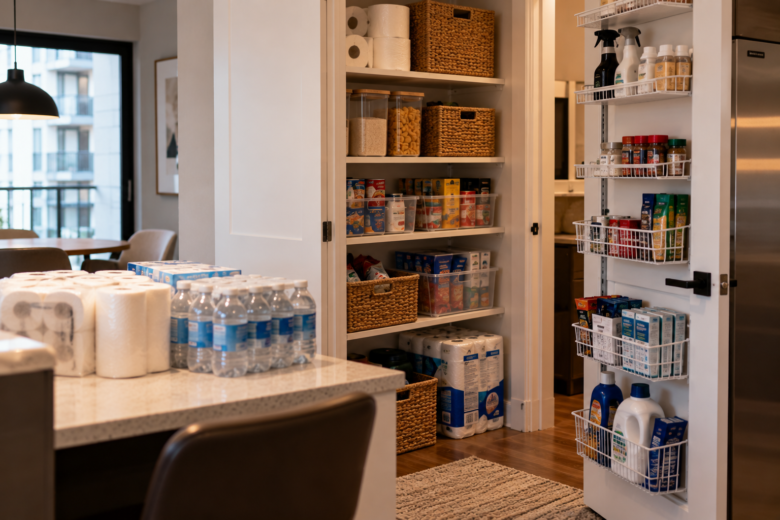
Create a physical limit for each category. The size of the shelf, basket, or cabinet should determine how much you keep at home. When the designated area is full, you have reached your limit—no matter how tempting the next sale may be.
Do Not Turn Every Empty Corner Into Storage
When space is limited, it is natural to use any available area. However, not every empty spot is suitable for storage.
Products should never block doors, windows, electrical panels, heaters, air vents, or emergency exits. Hallways and walkways must remain clear, including when you are carrying groceries, luggage, or laundry baskets.
Avoid leaving cardboard boxes directly on the floor in areas where leaks may occur, such as the kitchen, laundry area, or beneath a sink. A small amount of water can damage packaging and multiple products before anyone notices the problem.
Storage should make daily life easier. If you need to move an entire stack of boxes to reach a basic item, the system is not working.
Organize Products by Category
Arranging products only according to package size can create confusion. It is usually more effective to group them by purpose or by the room where they will be used.
Helpful categories may include:
- Dry food;
- Beverages;
- Personal care products;
- Household paper products;
- Laundry supplies;
- Cleaning products;
- Pet supplies;
- Replacement items.
Keep a small amount in the area where it is used and place the extras in a separate storage location. One bottle of dish soap can remain in the kitchen while the unopened replacements stay together in another cabinet.
This arrangement prevents oversized packages from taking over countertops, shelves, and visible areas of the apartment.
Make Better Use of Vertical Space
When floor space is limited, the height of walls and cabinets becomes an important storage resource.
Additional shelves can use the empty space above existing products. Hanging organizers may work inside cabinet or closet doors as long as they do not prevent them from closing properly. Stackable baskets also use height without creating unstable piles.
Other possibilities include:
- Narrow shelving units;
- Compact rolling carts;
- Over-the-door organizers;
- Cabinet dividers;
- Stackable containers with lids;
- Sturdy laundry-room shelves;
- Matching baskets above cabinets.
Heavy products should remain on lower shelves. Lightweight and bulky items can be placed higher, provided they remain safe and reasonably accessible.
If you rent your apartment, review the lease before drilling into walls or installing permanent fixtures.
Choose Furniture With Hidden Storage
Multifunctional furniture allows you to hide part of your household supply without adding more pieces to the apartment.
A storage bench can hold unopened paper products. A bed with drawers provides space for lightweight items with a long shelf life. A narrow rolling cart may fit beside a washing machine or refrigerator, as long as it does not block the appliance’s ventilation.
You may also consider:
- Storage ottomans;
- Side tables with doors;
- Closed console cabinets;
- Containers designed to fit under the bed;
- Entryway benches;
- Shelving units with baskets.
The furniture should remain useful even when it is not holding extra supplies. Buying several organizers just to accommodate products purchased impulsively can cancel out any savings from the original sale.
Reduce Packaging Carefully
Some products come inside large outer boxes that occupy much more space than the contents. When it is safe to do so, remove the outer packaging and arrange the individual items inside a smaller container.
Before discarding the box, preserve:
- Expiration dates;
- Directions for use;
- Lot numbers;
- Safety warnings;
- Manufacturer information.
Never transfer chemicals into beverage bottles, food containers, or unlabeled packages. Cleaning products should remain in their original containers with readable labels and should be stored separately from food, medication, and pet supplies.
Monitor Expiration Dates and Usage Order
A disorganized supply often hides older products behind recent purchases. By the time those items reappear, they may already be expired, damaged, or unsuitable for use.
Place older products in front and newer ones behind them. This simple system encourages you to use what entered the apartment first.
Review the storage area regularly and look for:
- Damaged packaging;
- Leaks;
- Signs of moisture;
- Products approaching expiration;
- Forgotten duplicates;
- Items your household no longer uses.
A simple list on your phone can also help. You do not need to record every single item, but it is useful to note which categories have already reached their storage limit before shopping.
Protect Products From Heat and Moisture
Your storage area should be clean, dry, and protected from extreme temperatures. Food should not be stored beside chemicals, and medication must be kept according to the directions on its packaging.
Avoid placing sensitive products near the stove, water heater, or windows that receive direct sunlight. A balcony should not become a permanent pantry extension without considering heat, rain, insects, and apartment community rules.
In homes with children or pets, cleaning supplies, medication, and concentrated detergents must remain secured and out of reach. Attractive organization should never come before safety.
Step by Step: Create a Functional Household Supply
Gather Everything You Already Have
Collect products from different rooms so you can see the actual quantities.
Remove Anything That Cannot Be Used
Dispose of expired, damaged, or leaking items appropriately.
Separate Products by Category
Group food, personal care, cleaning, laundry, and other replacement supplies.
Choose a Location for Each Group
Keep similar products together and, when practical, near the area where they will be used.
Establish a Physical Limit
Use the capacity of the shelf, box, or basket as the maximum amount allowed.
Arrange Items by Usage Order
Place older products in front and newer purchases behind them.
Label Closed Containers
Use simple labels so the contents are not forgotten.
Check Your Supply Before Shopping
Review what you already have and check expiration dates before buying more.
Real Savings Must Fit Inside Your Home
Bulk shopping can make everyday life easier, but only when the products remain accessible, safe, and proportional to the size of the apartment.
The goal is not to fill every available cabinet. It is to maintain a useful reserve without sacrificing space, money, or peace of mind. When every category has a designated place and a clear limit, purchases stop spreading silently throughout the home.
A promotion ends at the store. A good decision continues working after every package comes through your apartment door.