Organizing a small bathroom can feel nearly impossible when you have only one drawer, a cramped cabinet under the sink, or no enclosed storage at all. Because many bathroom products are used daily, they tend to collect on the countertop, around the sink, or along the edges of the bathtub. Before long, the room feels even smaller and more cluttered than it actually is.
The solution is not to force everything into the bathroom or buy several organizers before evaluating the space. A functional bathroom requires thoughtful choices: keeping only necessary items nearby, using overlooked areas, and creating a specific place for each category. Even without enough cabinets, you can organize the room without blocking movement or making cleaning more difficult.
Start by Removing Everything From the Bathroom
Before looking for more storage, determine exactly what needs to be stored. Remove products from drawers, countertops, the shower, and every basket. Gather everything in one place and separate it into categories:
- Hair care;
- Oral hygiene;
- Skin care;
- Shower products;
- Toilet paper;
- Towels;
- Cleaning supplies;
- Backstock and unopened packages.
During this process, discard empty containers, expired products, and anything you no longer use. Check whether you have multiple similar products open at the same time. Keeping three comparable bottles in use takes up space and makes it harder to notice what you actually need to replace.
Occasionally used products, large quantities of backstock, and extra towels do not need to remain in the bathroom. If space is available in a bedroom, hallway, or laundry closet, move anything that is not part of your daily routine there.
Organize Products According to How Often You Use Them
After sorting, divide your products into three groups: daily use, weekly use, and backstock.
Daily essentials should stay in the easiest places to reach, such as the top drawer, a small tray, or the most accessible shelf. Weekly products can occupy higher areas or the back of a cabinet. Backstock should remain in another room whenever possible.
This system prevents an unopened package of soap from taking up the same valuable space as your toothbrush. In a small bathroom, every accessible area should be reserved for something that is truly part of your routine.
Take Advantage of Vertical Space
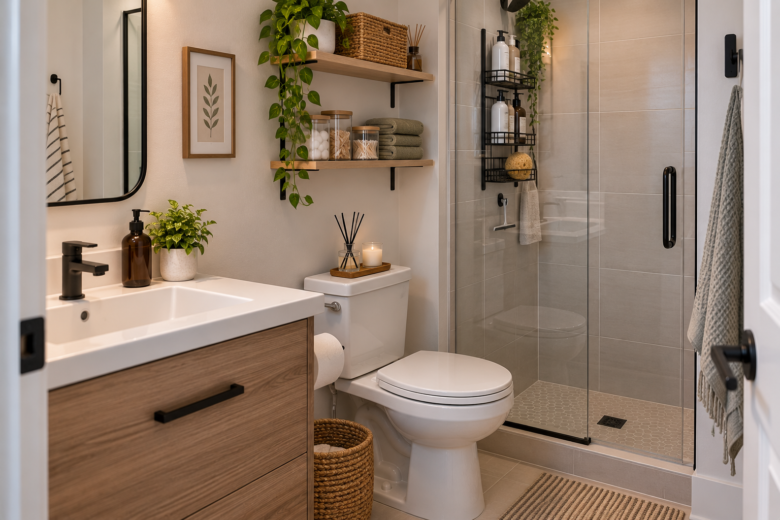
When the floor and countertop are limited, the walls become an important storage option. Narrow shelves, hanging baskets, hooks, and compact cabinets can add storage without interfering with movement.
The area above the toilet is often overlooked and can hold shelves or a freestanding over-the-toilet unit. Use it to store extra toilet paper, towels, or unopened products inside baskets. Avoid placing heavy or breakable containers where they could fall.
The back of the door can also hold hooks for a robe, towel, or lightweight toiletry bag. Before installing adhesive solutions, confirm their weight limit and make sure the door will still open completely.
In a rental, prioritize removable options or ask property management before drilling into walls. Installing fewer pieces that serve a real purpose usually works better than covering every available surface.
Use the Space Under the Sink Strategically
An under-sink cabinet may look spacious when empty, but plumbing significantly reduces the usable area. Instead of stacking products without a plan, measure the width, height, and open spaces around the pipes.
Organize this area by following these steps:
- Clean the inside of the cabinet and check for signs of leaks.
- Group products according to their purpose.
- Place tall containers in the open areas along the sides.
- Use baskets or stackable drawers that do not press against the pipes.
- Keep frequently used products near the front.
- Leave a small area visible so you can quickly notice a leak.
Cleaning products should remain tightly closed and out of reach of children and pets. Do not block shutoff valves or plumbing connections that may need to be accessed during maintenance.
Clear the Bathroom Countertop
A crowded countertop makes a bathroom look disorganized even when the products are grouped together. Items left near the sink also collect water, dust, and residue, making the surface more difficult to clean.
Keep only the products you use several times a day on the countertop. A small tray can hold hand soap, moisturizer, and a few daily essentials. It creates a visual boundary and lets you remove everything at once when cleaning.
Hairbrushes, electric tools, and large containers should remain in drawers, baskets, or designated holders. Before storing a hair dryer, curling iron, or flat iron, allow it to cool completely. Keep cords organized and away from water.
Turn Drawers Into Functional Storage
A single drawer can hold many items when it has the right dividers. Low-profile organizers prevent small objects from becoming mixed together and make the contents easier to see.
Separate products according to the steps in your routine, such as oral hygiene, skin care, and hair care. Do not buy dividers before measuring the inside of the drawer, including its height. Attractive organizers that prevent the drawer from closing are experts at creating an entirely new problem, and nobody needs that kind of talent in a small bathroom.
If the drawer is deep, use containers that can be removed easily. Avoid stacking too many items because anything hidden at the bottom will likely be forgotten.
Organize the Shower Without Creating Visual Clutter
Keep only the products you use while showering inside the shower or bathtub area. Empty bottles, samples, and rarely used products should be removed.
An over-the-showerhead caddy, corner shelves, or baskets with proper drainage can free up the edges of the bathtub. Choose moisture-resistant materials and avoid storage solutions that collect standing water.
Leave some space between bottles to make drying and cleaning easier. The more products you keep in the shower, the more likely residue and visual clutter are to build up.
Be Careful About What You Store in the Bathroom
Humidity and temperature changes can damage certain items. Medications, documents, sensitive makeup products, and large quantities of paper goods should be stored in a dry area outside the bathroom whenever possible.
Towels also need ventilation. Avoid placing them in closed baskets while they are still damp. Hooks and towel bars should allow them to dry completely before they are folded or stored.
Make the Organization Fit Your Routine
After organizing the bathroom, observe the space for a week. If certain products continue to end up on the counter, the place you selected for them may not be convenient. Organization should follow your natural movements, not require a small ceremony every time you brush your teeth.
Set aside a few minutes each week to return products to their designated places, clean the surfaces, and check your backstock. Before purchasing something new, confirm that you do not already own another product with the same purpose.
A small bathroom will never feel organized if it is trying to hold more than it can reasonably accommodate. The real improvement begins when you stop fighting the lack of space and start deciding intentionally what deserves to occupy it.
When every product has a purpose and a designated place, even the smallest bathroom becomes lighter, easier to clean, and more pleasant to use. The room does not need to become larger to function better. Sometimes, you simply need to remove the excess, use the areas that were previously overlooked, and finally give the space room to breathe.