Buying a large appliance for a rental apartment sounds simple until it does not fit through the door, does not fit in the designated space, requires an installation your building does not allow, or needs a connection your apartment simply does not have.
Refrigerators, washing machines, dryers, freezers, portable dishwashers, and other large appliances require more planning than just choosing a model you like or taking advantage of a good sale.
In a rental, the decision needs to consider not only the appliance itself, but also the available space, property rules, installation requirements, delivery access, and even what will happen when you move out.
Before buying, take time to check the details. A few measurements and questions can save you from an expensive return and a lot of frustration.
Start With the Exact Measurements
The first step is obvious, but it is also one of the most commonly skipped.
Do not rely on visual estimates.
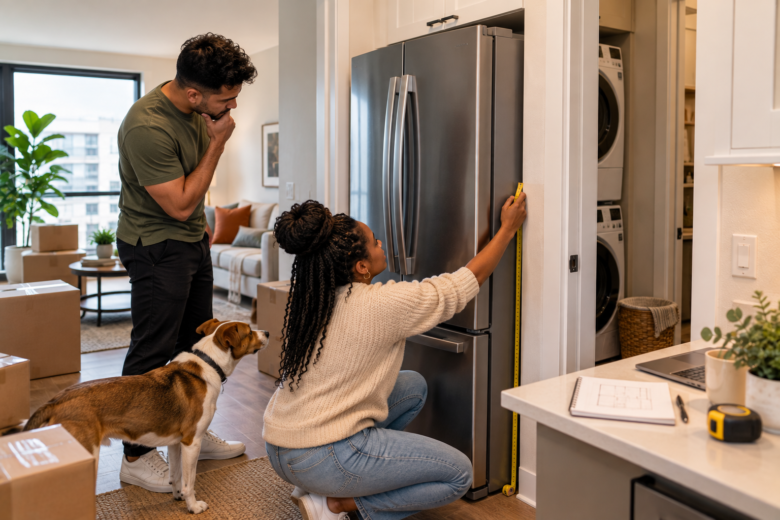
Measure the exact space where the appliance will go. Write down:
- Width
- Height
- Depth
- Side clearance
- Distance from the wall
- Space needed for doors or lids to open
A refrigerator, for example, may technically fit into the opening but still not work well in that space.
Some models need extra clearance on the sides or back for ventilation. You also need to make sure the doors can fully open without hitting a wall, cabinet, or countertop.
For washers and dryers, remember to leave room behind the appliance for hoses, cords, and connections.
Try not to buy based on extremely tight measurements. If the space is 30 inches wide, buying an appliance that is exactly 30 inches wide can create problems during installation.
Measure the Entire Delivery Path
This is the detail that can ruin an otherwise well-planned purchase.
It does not matter if the appliance fits perfectly in the kitchen if it cannot get there.
Before buying, measure:
- The apartment entrance
- Interior doors
- Hallways
- Stairways
- Elevators
- Tight corners
- Narrow spaces between walls or furniture
Also check whether a door can be temporarily removed if necessary and whether the property allows it.
If your building has an elevator, measure both the elevator door and the interior space.
If you live upstairs in a building without an elevator, confirm whether the delivery company will carry the appliance up the stairs and whether there is an extra fee.
Check Which Appliances Already Belong to the Apartment
Before buying anything large, confirm which appliances officially belong to the rental unit.
In many U.S. apartments, appliances such as the refrigerator, stove, dishwasher, or microwave are provided by the property.
Even if one of those appliances looks old, that does not necessarily mean you can remove it and replace it on your own.
Ask management whether the appliance:
- Belongs to the apartment
- Can be removed
- Must be stored somewhere
- Needs to be reinstalled before you move out
This is especially important if you want to upgrade a refrigerator or replace a washer provided by the property.
Never assume you can simply throw away an appliance that came with the unit.
Confirm That the Appliance Is Allowed
Not every appliance can be installed freely in a rental apartment.
Some properties have specific rules regarding washing machines, dryers, portable dishwashers, extra freezers, or other equipment that uses significant water or electricity.
Before buying, ask:
Is this type of appliance allowed in the unit?
Do I need approval before installation?
Does installation need to be completed by a professional?
Are there any restrictions in the lease?
A quick question to the leasing office can prevent a much bigger problem later.
It is also worth reviewing your lease and any community rules before placing the order.
Check the Available Connections
Two similar appliances can require completely different setups.
Before choosing a model, check exactly what your apartment already has.
For a washing machine, look for:
- Water supply connections
- Drain access
- The correct electrical outlet
- Enough room for hoses
Dryers require even more attention.
Some dryers are electric, while others use gas. Certain models also require exterior venting.
Buying first and checking later can leave you with an appliance that simply cannot be installed in your apartment.
Check the Voltage and Outlet Type
Not all electrical outlets are the same.
Some large appliances require dedicated circuits or special outlets.
In the United States, certain appliances use connections that are different from the standard outlets found throughout the rest of the apartment.
Before buying, look at the existing outlet and compare it with the manufacturer’s requirements.
Do not attempt to modify electrical connections yourself.
If you are unsure whether the appliance is compatible, contact property management or a qualified professional.
Electrical changes in a rental usually require approval.
Think About Ventilation
Large appliances generate heat.
Refrigerators, freezers, and dryers need enough space around them to operate properly.
Placing an appliance too tightly between cabinets or directly against a wall can reduce airflow.
Before installation, check the manufacturer’s recommended clearance around the appliance.
This can affect both performance and the lifespan of the equipment.
Consider How the Appliance Will Affect the Space
The appliance may fit physically, but that does not always mean it works well for your apartment.
A large freezer, for example, takes up floor space and increases electricity use.
A washing machine may create vibration and noise.
A dryer can generate heat and may require additional ventilation.
Think about where the appliance will sit and how it will affect the surrounding area.
In a small apartment, a few inches can make a major difference.
Do Not Forget About Noise
Noise is easy to overlook while shopping.
Some appliances are much louder than others.
This matters even more in apartments where the kitchen, living room, and work area are close together.
Check the manufacturer’s specifications and read customer reviews for comments about noise and vibration.
A loud washing machine may be manageable in a house with a separate laundry room, but much more annoying in a small apartment.
Understand the Delivery Before You Buy
Before paying, find out exactly what the delivery service includes.
Ask whether the company:
- Brings the appliance inside the apartment
- Carries it up stairs
- Uses elevators
- Installs the appliance
- Removes packaging
- Hauls away the old appliance
Some stores charge separately for these services.
Your apartment community may also have rules for large deliveries, including specific delivery hours or elevator reservations.
It is much easier to arrange this in advance than to have a delivery truck waiting outside while you try to figure out the building’s rules.
Find Out Who Is Responsible for Installation
Delivery does not always include installation.
And even when installation is included, the service may not cover every situation.
For example, an installer may refuse to connect an appliance if the existing setup is outdated, incompatible, or does not meet installation requirements.
Before buying, find out exactly what will be needed.
In a rental apartment, any permanent modification should be discussed with management before it is made.
Think About Your Next Move
This is one of the biggest differences between buying an appliance for a home you own and buying one for a rental.
You may not stay in that apartment forever.
Before investing in a large and heavy appliance, ask yourself:
Could I realistically move this appliance to another home?
Is the size standard, or is it unusually specific to this apartment?
Would it be worth paying to move it later?
Sometimes a slightly smaller and more flexible appliance is a smarter choice for renters.
Keep Your Documents and Measurements
After the purchase, keep the important information organized.
Save:
- The receipt
- Model number
- Serial number
- Manual
- Warranty information
- Installation receipt
- Appliance measurements
Taking a photo of the label showing the model and serial number is also helpful.
This makes warranty claims, repairs, and replacement parts much easier to handle later.
Use a Final Checklist Before You Buy
Before placing the order, confirm:
- Does the appliance fit the space?
- Is there enough room for ventilation?
- Can the doors open properly?
- Can it fit through the entrance, hallways, and elevator?
- Does the property allow this appliance?
- Is the outlet compatible?
- Are the necessary water, gas, or vent connections available?
- Is the installation allowed?
- Can the delivery company reach the unit?
- Is there enough space for hoses and cords?
- Is the noise level reasonable for your apartment?
- Could you take the appliance with you when you move?
If one of these answers is still unclear, wait before buying.
A sale may feel urgent, but returning a 300-pound refrigerator because it cannot fit through the doorway is usually much less exciting.
The Right Appliance Starts With the Right Planning
Choosing a large appliance for a rental apartment involves much more than comparing brands, prices, and features.
The best appliance is not necessarily the biggest, newest, or most heavily discounted one.
It is the one that actually works with the space and the limitations of the apartment where you live.
Measuring carefully, checking connections, talking to management, and understanding delivery requirements may feel like extra work.
In reality, it is a few minutes of preparation that can prevent hours of problems later.
When you rent, buying smart means thinking not only about where the appliance will go today, but also about how it will be installed, used, and eventually moved with you to your next home.