
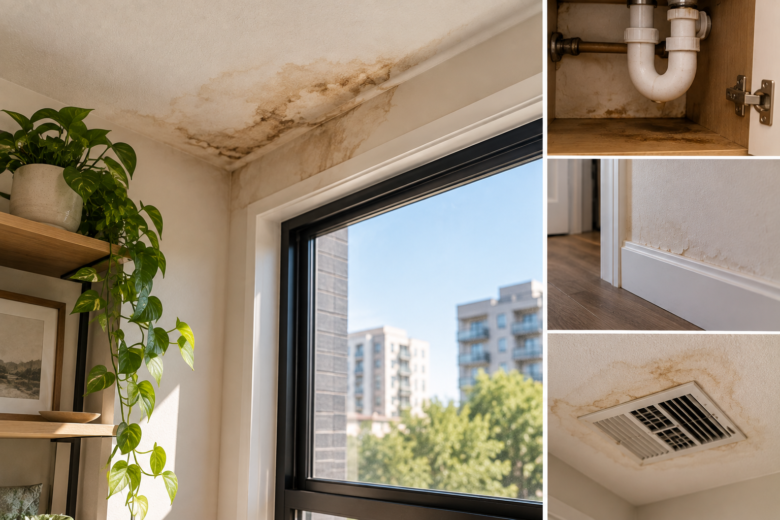
An apartment can look spotless during a tour and still have signs of previous leaks, moisture, or water damage hidden in plain sight. Fresh paint, good lighting, and a clean smell can create a great first impression, but they can also make small warning signs easier to miss.
Before signing a lease, it is worth taking a few extra minutes to look at the unit more carefully. The goal is not to perform a professional inspection. It is simply to notice anything that deserves an extra question or closer look before you commit.
Water damage can affect paint, wood, cabinets, flooring, ceilings, and even the overall comfort of the apartment. The earlier you notice something unusual, the easier it is to understand the situation before moving in.
Start by Looking Up
Many renters tour an apartment while focusing on the furniture layout, room size, and windows. The ceiling often gets ignored.
But it is one of the first places you should check.
Look for:
- Yellow or brown stains
- Circular or irregular marks
- Areas with a different shade of paint
- Peeling paint
- Small bubbles in the surface
- Sections that appear to have been painted more recently
A freshly painted area does not automatically mean there is a problem. Apartments are often repainted between tenants.
However, if only one small section of the ceiling looks noticeably newer, especially near a bathroom, kitchen, laundry area, or window, it is worth asking why.
A simple question can help:
“Has this area ever had a leak or water-related repair?”
The answer may reveal something that would not be obvious from appearance alone.
Check Walls and Baseboards
Previous water damage does not always look like a large stain.
Sometimes the signs are much more subtle.
Look closely at the lower sections of the walls and especially the baseboards. Watch for swelling, peeling paint, warped wood, or small changes in color.
If a baseboard seems to pull away from the wall or has a different texture in one specific area, it may have been exposed to moisture in the past.
Pay extra attention to walls near:
- Bathrooms
- Washing machines
- Dishwashers
- Sinks
- Water heaters
- Windows
- Exterior doors
Also inspect the corners of rooms. Moisture-related issues can sometimes become visible first in areas that receive less airflow or are easy to overlook.
Open the Cabinets Under Every Sink
This is one of the most important parts of the apartment tour.
Open the cabinet under the kitchen sink and every bathroom sink. Do more than take a quick glance. Look at the bottom, sides, back, and the areas around the pipes.
Watch for:
- Swollen wood
- Stains
- Discoloration
- Peeling material
- Warped surfaces
- Strong or unusual odors
- Signs of temporary or improvised repairs
If the bottom of the cabinet looks noticeably different from the rest of it, ask whether it has ever been replaced.
A slow leak can cause significant damage over time without leaving visible water during your visit.
Do Not Ignore Unusual Smells
Your sense of smell can tell you a lot.
When you first enter the apartment, notice whether there is a very strong smell of cleaning products, air freshener, or fresh paint.
That does not necessarily mean something is wrong. Apartments are usually cleaned before a new tenant moves in.
But after spending a few minutes inside, pay attention to whether a musty or damp smell appears in any particular area.
Open closets, cabinets, and laundry doors.
If a small enclosed space smells noticeably different from the rest of the apartment, it may be worth asking whether that area has ever had a moisture problem.
Do not try to diagnose the cause yourself. Ask about it.
Look Closely at the Flooring
Some types of flooring show signs of water exposure more clearly than others.
With laminate flooring, look for raised edges, slight waves, or boards that no longer sit evenly.
With wood flooring, watch for warping or changes in color.
With carpet, look for stains, darker areas, or sections with a different texture.
Also walk slowly through each room. If one small area feels softer, uneven, or different under your feet, take a closer look.
That does not prove that there was a leak, but it gives you a good reason to ask about the history of that area.
Check Around the Windows
Windows are another common place where water can enter.
Inspect the lower edges, corners, trim, and surrounding wall.
Look for:
- Raised or peeling paint
- Stains
- Cracks
- Warped wood
- Marks on the windowsill
- Changes in wall texture
If you happen to tour the apartment after a rainy day, even better. It gives you a chance to notice whether there is visible moisture around the windows.
You can also ask whether the windows have ever been repaired or replaced because of leaks.
Check the Laundry Area and Water Heater
If the apartment has an in-unit washer, look closely at the area surrounding it.
Hoses and connections can leak, especially in older installations.
Look for stains on the flooring, swollen baseboards, or signs of repairs near the connections.
Do the same around the water heater if it is located inside the unit.
You do not need to touch the equipment or inspect technical connections. A visual check of the surrounding area is enough.
If there is a drain pan underneath the water heater, look for old water marks or staining.
Pay Attention to Fresh Paint in Only One Area
A newly painted apartment is completely normal.
What deserves a second look is a small section that appears much newer than everything around it.
For example, imagine an entire wall with slightly aged paint but one perfectly fresh rectangular section near the floor.
That may simply mean a repair was completed.
And that is exactly why it is worth asking what was repaired.
The concern is not that maintenance happened. Every apartment will eventually need repairs.
The important question is whether the original cause of the problem was also fixed.
Photograph Anything That Raises a Question
If you decide to rent the apartment, document the condition of the unit as soon as you receive the keys.
Take photos of stains, scratches, repaired areas, cabinet damage, flooring issues, and any other imperfections you notice.
It is also helpful to record a few videos showing each room as a whole.
This creates a clear record of the apartment’s condition at the beginning of your lease.
If the property provides a move-in inspection form, include these observations there as well.
Keeping this documentation can also help you notice whether a stain or damaged area changes over time.
Helpful Questions to Ask Before Signing
You do not need to turn the apartment tour into an interrogation. A few clear questions can give you valuable information:
Has this apartment ever had a leak?
Has any part of the unit had water damage recently?
Was this ceiling or wall repaired?
Have these windows ever leaked during heavy rain?
Has there been a previous problem with the washer, dishwasher, or plumbing?
If I notice a leak after moving in, what is the process for requesting maintenance?
The answers can also tell you something about how the property management team handles maintenance and communication.
Not Every Sign Means There Is an Active Problem
This is important.
An old mark does not automatically mean the apartment currently has a leak.
There may have been a problem in the past that was properly repaired.
The goal is not to see one stain and immediately reject the apartment.
The goal is to understand the context.
If you notice something suspicious, ask what happened, when it was repaired, and whether the source of the problem was corrected.
If necessary, ask management to inspect the area before you sign the lease.
Take One Final Walk Before You Leave
Before ending the tour, walk through the apartment one more time.
This time, forget about decorating, room size, and where your sofa might go.
Look at the ceilings, walls, baseboards, cabinets, flooring, and windows.
Those few extra minutes can reveal details that were easy to miss the first time around.
A good apartment does not need to be perfect or have a history with zero repairs. What matters is knowing what you are renting.
When you learn how to recognize small warning signs and ask the right questions, you stop relying only on first impressions and start evaluating the apartment more carefully.
That extra attention before signing can save you from a much bigger surprise after moving in.