
Assembling a bookshelf, moving the sofa, or shifting a table a few inches may seem like a simple task. The problem comes when the furniture is finally in place and you notice a long scratch on the floor that wasn’t there before.
In a rental apartment, that small accident can become important when it’s time to move out.
Hardwood, laminate, vinyl, carpet, and other flooring can be damaged while assembling furniture or changing your apartment’s layout. Loose screws, dropped tools, heavy boxes, and furniture legs may be enough to leave permanent marks.
The best strategy is to protect the floor before you start moving anything. A few minutes of preparation can prevent damage that lasts long after the furniture is assembled.
Know What Type of Floor You’re Protecting
Before choosing any protective material, identify the flooring in your apartment.
Rental properties may have:
- hardwood;
- laminate;
- luxury vinyl plank;
- tile;
- carpet;
- other flooring materials.
Each surface reacts differently to weight, friction, moisture, and adhesive products.
If you’re unsure what type of flooring you have, ask property management before applying anything directly to it.
Don’t assume that a product designed for one type of flooring is automatically safe for another.
Clean the Floor Before Covering It
Cleaning an area you’re about to cover may seem unnecessary, but this step matters.
Small grains of sand, dirt, and debris can become trapped between the protective material and the floor.
When a heavy box or piece of furniture moves across that surface, those particles can act like abrasives and create scratches.
Vacuum or sweep the area carefully and, when necessary, clean it according to the flooring manufacturer’s recommendations.
Let the floor dry completely before adding any protective covering.
Create a Dedicated Furniture Assembly Area
Don’t assemble furniture wherever you happen to find an open spot.
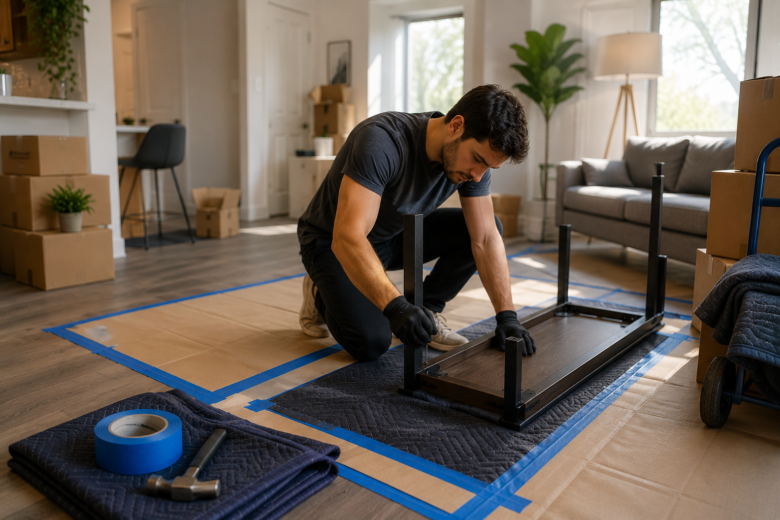
Choose a specific area and protect it before opening the box.
You can use temporary floor protection products designed for the type of surface in your apartment, always following the manufacturer’s instructions.
In some situations, a thick moving blanket can help protect against minor impacts during assembly, as long as it stays secure and doesn’t create a slipping hazard.
Make the protected area larger than the furniture itself.
Screws and tools rarely fall exactly where you expect them to.
Never Drag Heavy Boxes Across the Floor
A furniture box may look smooth underneath, but tiny particles caught in the cardboard can be enough to scratch certain flooring surfaces.
Instead of dragging it, lift the box with help when necessary or use appropriate moving equipment.
The same rule applies after the furniture has been assembled.
Even an empty dresser may be heavy enough to damage the floor.
If something is too large or heavy to move safely, ask for help.
Protecting the apartment isn’t worth injuring yourself.
Add Felt Pads Before Positioning Furniture
Felt pads are a simple solution for many pieces of furniture placed on hard flooring.
They can be added to the legs of:
- chairs;
- tables;
- sofas;
- dressers;
- side tables;
- other compatible furniture.
The best time to install them is before moving the furniture into its permanent position.
Check the pads periodically to make sure they’re still attached and clean.
A worn pad or one with debris trapped underneath may stop protecting the floor effectively.
Always choose the appropriate size and type for the furniture’s weight and design.
Be Extra Careful When Assembling Furniture on the Floor
Many pieces of furniture are assembled while lying flat and lifted upright only at the end.
Before starting, read the complete assembly instructions.
Determine how much space you’ll need and protect the entire area where the furniture components will rest.
Keep screws, nuts, and tools inside a small container instead of leaving them scattered across the floor.
If a tool falls, the protective layer may reduce the impact.
Before lifting the finished furniture, check underneath it to make sure no metal pieces or tools were left behind.
Protect Carpeted Floors Too
Carpet doesn’t scratch the way hardwood does, but that doesn’t mean it can’t be damaged.
Furniture assembly can leave behind:
- dirt;
- stains;
- debris;
- tool marks;
- fibers caught in furniture parts.
Avoid placing dirty components directly on the carpet.
When assembling furniture, use a clean, stable protective layer between the pieces and the carpet.
Be especially careful with drinks, cleaning products, and other liquids while working.
A spill that takes only seconds can create a stain that’s much harder to deal with than the furniture assembly itself.
Plan the Route Before Rearranging Furniture
When you decide to change your apartment’s layout, don’t start by pushing furniture.
First determine:
- where the furniture is moving from;
- where it’s going;
- which route you’ll use;
- which objects need to be removed;
- whether doors and hallways provide enough clearance.
Remove loose rugs, cords, and small objects from the path.
Then, when appropriate, use furniture sliders designed for both your flooring type and the furniture you’re moving.
Never assume the same slider will work equally well on carpet and hard flooring.
Don’t Apply Tape Directly to the Floor Without Checking
Using tape to secure protective materials may seem like an easy solution.
However, some adhesives can leave residue or affect certain floor finishes.
Read the product instructions and confirm that it’s compatible with the surface.
When in doubt, avoid applying tape directly to the flooring.
In a rental, solving one problem by creating another definitely doesn’t help.
Inspect the Area When You’re Finished
Once the furniture has been assembled or repositioned, carefully remove your tools and protective materials.
Inspect the floor before covering the area with rugs, furniture, or boxes.
Check for:
- debris;
- forgotten metal pieces;
- moisture;
- marks;
- displaced furniture pads.
Clean the area again if necessary.
Checklist Before Moving Any Furniture
Make sure you’ve:
- identified the flooring type;
- cleaned the area;
- created a protected work zone;
- organized screws and tools;
- added protective pads to furniture legs;
- planned the moving path;
- arranged help for heavy pieces;
- checked that tape and sliders are compatible with the floor.
The Easiest Scratch to Fix Is the One That Never Happens
Once your furniture is in place, it’s easy to forget everything that happened during assembly.
Your floor, however, may keep the evidence.
Don’t wait until you hear something scraping to think about protection.
Clean first, cover the work area, organize your tools, and move each piece carefully.
You’ll still be free to rearrange your apartment whenever you want without treating every layout change as a threat to your security deposit.
Protecting the floors in a rental doesn’t mean being afraid to use your home.
It means enjoying and changing your space freely, without leaving unnecessary marks behind every time you decide to transform it.

Comments
Simple advice, but honestly very important.