An apartment entryway may occupy only a few square feet, but it plays a role in many parts of your daily routine. It is where you look for your keys before leaving, take off your shoes when you return, receive packages, and attempt to walk in while carrying bags or groceries. When this area is not planned properly, objects quickly begin to accumulate near the door and make the walkway uncomfortable.
In a small apartment, the challenge is even greater because there may not be a separate foyer. The front door often opens directly into the living room, a narrow hallway, or even the kitchen. Still, it is possible to create a functional entryway without interfering with circulation. The key is to evaluate the available space before choosing furniture and limit this area to the items that truly need to remain near the door.
Observe How the Door and People Move
Before buying anything, open the door completely and observe its full range of motion. The entryway should remain clear throughout that entire path. A piece of furniture may appear small when the door is closed but still prevent it from opening fully or make entering the apartment uncomfortable.
Next, recreate common situations: walk in carrying grocery bags, receive a package, put a leash on your dog, or leave the apartment with another person. Notice where you naturally place objects and which side you typically walk through.
You should also identify light switches, outlets, air vents, electrical panels, and thermostats. These must remain visible and accessible. If you rent the apartment, check which types of installations and wall attachments are allowed under your lease.
Measure the Space You Can Actually Use
Do not assume that the entire wall is available. Part of it may be needed for the door to open, for access to a closet, or simply for someone to walk through comfortably.
Take your measurements by following these steps:
- Measure the total width of the entryway.
- Open the front door and mark how far it extends.
- Identify the natural path from the door to the next room.
- Measure the depth available outside that path.
- Use removable painter’s tape to outline the furniture dimensions on the floor.
- Walk through the area and test the pathway before purchasing anything.
This simple simulation helps reveal when a console table or bench, although narrow in listing photos, would still take up too much space. Remember to account for handles, baskets, drawers, and cabinet doors when they are fully open.
Decide What Needs to Stay Near the Door
A small entryway should not become a storage area for everything that has not found a place elsewhere in the apartment. It should support the actions that happen when you enter and leave your home.
Create a short list of the items you use daily, such as:
- Keys;
- A purse or backpack;
- Frequently worn shoes;
- A seasonal coat;
- Mail;
- An umbrella;
- Your pet’s leash and accessories.
Avoid moving every pair of shoes, multiple coats, or unopened packages into this area. The more you store there, the harder it will be to keep the walkway clear. Items used less frequently can remain in closets or storage areas elsewhere in the apartment.
Choose Furniture With a Shallow Depth
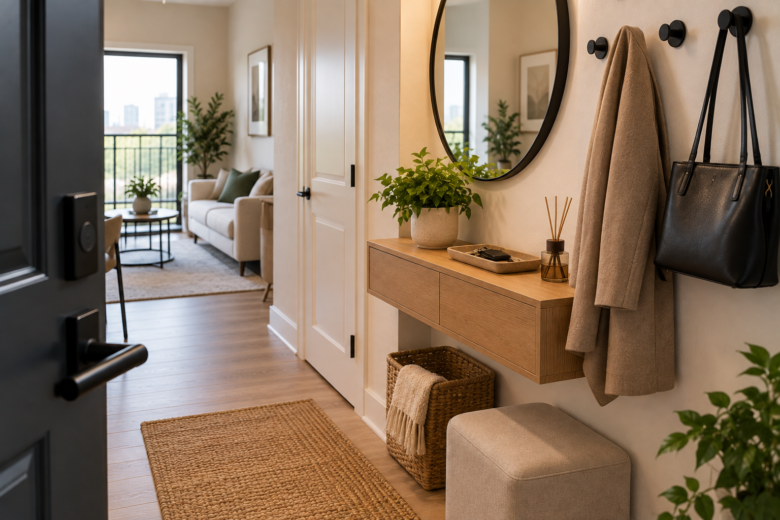
When space allows, a narrow console table, vertical shoe cabinet, or compact bench can help organize the entryway. Depth, however, is usually more important than width. A long, shallow piece may interfere less with the walkway than a short but deep piece.
Furniture with closed doors can conceal small objects and reduce the appearance of clutter. Open storage, on the other hand, requires more discipline because everything remains visible. If you choose a bench, consider whether you will actually use it to put on your shoes. Otherwise, it may simply become another surface where bags and mail begin to accumulate.
In an extremely limited space, the best piece of furniture may be no furniture at all. A small shelf, a few hooks, and a tray for keys may support your routine without occupying any floor space.
Use the Walls Without Creating Obstacles
Vertical space is valuable, but it must be used carefully. Hooks, shallow shelves, and wall organizers can free up the floor as long as they do not extend too far into the walkway.
Install frequently used items at a comfortable height. Hooks placed too high are inconvenient, while hooks placed too low can cause bags or coats to brush against people walking by. Avoid placing sharp or protruding objects at shoulder height or anywhere someone could bump into them.
If you cannot drill into the walls, look for removable solutions designed to support the weight of the items you plan to hang. Follow the manufacturer’s instructions and do not place heavy objects on adhesive products intended only for lightweight items.
A mirror can also be useful for a quick check before leaving while making the entryway feel visually larger. Choose a slim, securely mounted model and position it away from the door handle.
Create Boundaries Even Without a Separate Foyer
When the front door opens directly into another room, a few small elements can create a visual boundary. A compact rug, light fixture, mirror, or group of hooks can define the entryway without adding walls or oversized furniture.
The rug should allow the door to open completely and should have a nonslip backing. Thick rugs may catch under the bottom of the door, while oversized options can extend too far into the living room and make cleaning more difficult.
You should also avoid dividers that narrow the pathway. Folding screens, open shelving units, and large plants may define the space, but they do not always work in a small entryway. If they force people to change direction or squeeze past them, they are creating a new problem instead of organizing the area.
Organize the Entryway Around Your Routine
After installing the main elements, assign a specific purpose to each one. Keys may go in a tray, shoes on a low shelf, and your bag on a sturdy hook. The clearer each item’s designated place is, the less likely clutter will be to build up.
Create a rule for mail and packages as well. Papers should be sorted or discarded regularly, and boxes should not remain in the walkway. A few minutes each week are usually enough to restore order.
Observe how the space works during the first few days and make adjustments. If objects continue to be left somewhere else, the solution you selected may not match the natural flow of your home.
When the Entryway Works, the Entire Apartment Feels Better
A functional entryway does not need to be large, perfectly decorated, or filled with organizers. It needs to let you open the door, walk inside, put away the essentials, and continue into the next room without stepping around furniture or tripping over objects.
Before trying to fill every corner, protect the empty space needed for comfortable movement. In a small apartment, this empty space is not wasted. It creates comfort, safety, and a greater sense of openness.
When every item near the door serves a real purpose, the entryway stops being a place where clutter collects and begins to make daily life easier. Even in a small space, it can fulfill an important role: welcoming you home every day with fewer obstacles and much more ease.