
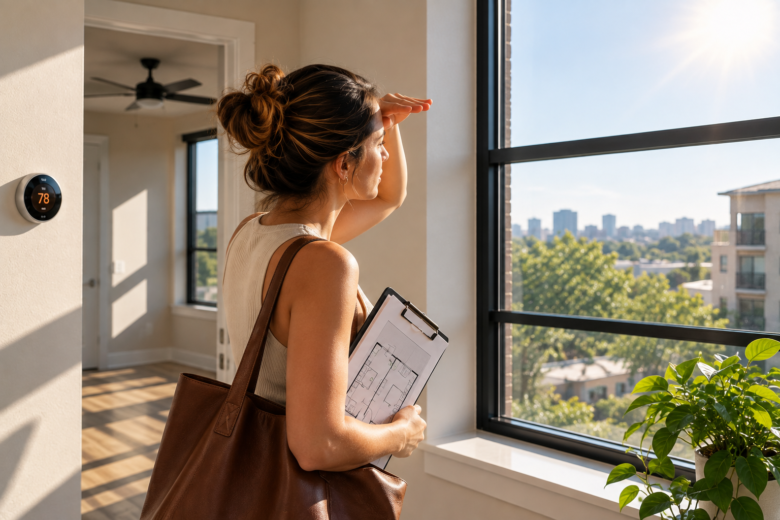
A bright apartment with large windows and plenty of natural light may look perfect during a tour. However, once summer arrives, that same unit can become difficult to cool and expensive to keep comfortable.
The problem is that a short apartment tour does not always reveal how the space handles hot weather. The temperature may feel pleasant because the air conditioning was turned on shortly before your arrival, the day is cloudy, or the tour takes place early in the morning.
Before signing the lease, look beyond the apartment’s appearance. The unit’s location, floor level, window orientation, cooling system, and even the trees surrounding the building can help you determine whether the apartment is likely to become excessively hot during the summer.
Start With the Apartment’s Position in the Building
The unit’s location within the building directly affects how much heat it receives.
Top-floor apartments often get hotter because they are closer to the roof, one of the surfaces that absorbs the most heat throughout the day. This does not mean every top-floor unit will be uncomfortable, but you should check whether the building has proper insulation and whether the air-conditioning system can cool the space efficiently.
Corner units may also receive heat through more than one exterior wall. In comparison, apartments located between other units usually have fewer surfaces directly exposed to outdoor temperatures and sunlight.
Check whether the apartment is located above a garage, mechanical room, or unconditioned space. Depending on the building’s construction and insulation, these areas may also affect the temperature inside the unit.
Check Which Direction the Windows Face
Window orientation is one of the most useful clues for understanding how an apartment will feel during the summer.
In the Northern Hemisphere, west-facing windows receive the strongest afternoon sunlight, usually when outdoor temperatures are already at their highest. Bedrooms and living rooms facing west may remain warm even after sunset.
South-facing windows tend to receive significant sunlight throughout the day. East-facing windows mainly receive morning sun, which is generally less intense. North-facing units usually receive less direct sunlight.
Use the compass on your phone to check the direction of the main windows. This quick test can reveal something the listing photos will never show.
Inspect the Windows and Sun Protection
Knowing where the sunlight comes from is not enough. You also need to determine how well the windows protect the apartment from heat.
Check whether the windows appear to have single- or double-pane glass, whether the frames are properly sealed, and whether blinds are already installed. Older windows with gaps or limited insulation can allow heat to enter continuously, making it more difficult for the air conditioner to cool the space.
Pay attention to the size of the glass surfaces as well. A floor-to-ceiling window may look impressive, but it can require much more energy to keep the room cool, especially when it receives direct afternoon sunlight.
Outside the apartment, look for trees, balconies, awnings, overhangs, or nearby buildings that create shade. Keep in mind, however, that the sun’s position changes throughout the year and that some trees lose their leaves during certain seasons.
Test the Air-Conditioning System
During the tour, confirm whether the apartment has central air conditioning, individual units, or another type of cooling system. Then determine whether it serves every room adequately.
Follow these steps:
- Check the temperature displayed on the thermostat and compare it with how the apartment actually feels.
- Ask for permission to turn on or adjust the system if it is not running.
- Place your hand near the vents to confirm that there is noticeable airflow.
- Check whether cool air reaches the bedrooms, living room, and areas farther from the main unit.
- Listen for loud noises, vibrations, or irregular sounds.
- Ask when the system was last serviced and who is responsible for replacing the filters.
An air conditioner that is running during the tour is not necessarily working efficiently. If it operates continuously while the apartment still feels warm or stuffy, the system may have limited capacity, maintenance problems, or air leaks.
Look for Signs of Excessive Heat
Some details may suggest that the apartment regularly struggles with high temperatures.
Warped blinds, temporary window coverings, several fans throughout the unit, or portable air conditioners can indicate that the main cooling system is not enough.
Carefully touch walls near the windows and areas exposed to direct sunlight. If they feel unusually warm, they may be absorbing and retaining heat. Notice whether the bedrooms feel warmer than the living room or whether there is a significant temperature difference between rooms.
Musty odors near the vents, stains around air registers, and excessive condensation also deserve attention and should be discussed before you move forward.
Visit During the Hottest Part of the Day
Whenever possible, schedule the apartment tour between midday and late afternoon, especially on a sunny day. Heat-related issues are more noticeable during these hours.
If your first tour takes place in the morning, consider returning at a different time before making a decision. Two visits may seem unnecessary, but they require little effort compared with committing to a lease that may last a year or longer.
Walk through the common areas as well. Extremely warm hallways, stuffy elevators, and limited ventilation can provide clues about the building’s overall insulation and cooling system.
Ask Direct Questions Before Making a Decision
Ask the landlord, leasing agent, or property manager:
- What is the average electricity bill during the summer?
- Does the air-conditioning system cool the entire apartment?
- Have residents reported bedrooms or other rooms that do not cool properly?
- Is air-conditioning maintenance included in the rent?
- Is the tenant responsible for replacing the filters?
- Are thermal curtains or removable window films allowed?
- Can the tenant control the thermostat freely?
If current residents are nearby, a polite conversation may also provide valuable information. Asking whether the apartments become too hot in the afternoon will often generate more honest answers than simply asking whether the building is comfortable.
Turn the Apartment Tour Into a Small Investigation
Before leaving, record the direction of the windows, floor level, areas that receive direct sunlight, condition of the blinds, and temperature of each room. Take pictures and write down the answers you receive. This will help you compare apartments using practical criteria instead of relying only on your memory or the excitement of the tour.
A beautiful apartment can quickly lose its appeal when the air conditioner must run constantly or the bedroom remains hot throughout the night. Do not evaluate only what you can see. Try to understand how the space performs during the most challenging days of the year.
The best choice is not necessarily the apartment that makes the strongest first impression. It is the one that will remain comfortable when the season changes. A few extra minutes of observation before signing the lease can prevent months of discomfort, sleepless nights, and electricity bills high enough to make anyone feel overheated.



Comments
Really smart advice. Sometimes the smallest details make the biggest difference.