
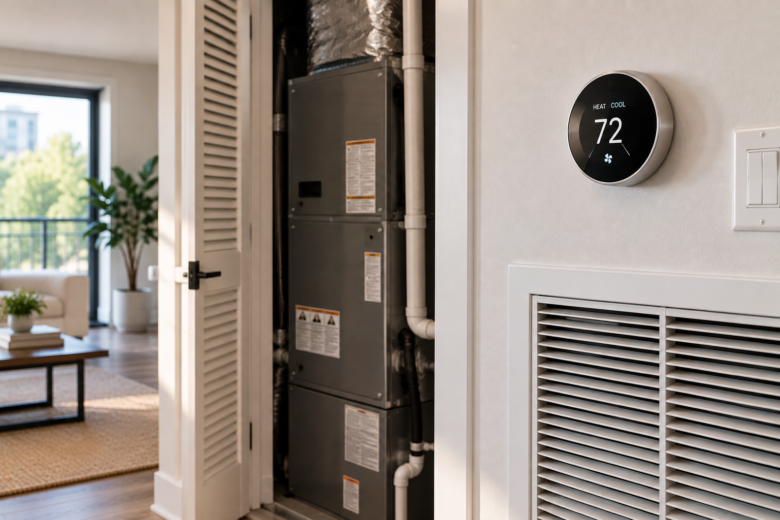
The heating and air-conditioning system often receives very little attention during an apartment tour. While cabinets, countertops, and bedroom sizes are carefully inspected, the equipment responsible for keeping the home comfortable during extreme seasons may be reduced to one quick question: “Does it work?”
The problem is that turning on does not necessarily mean working well. A system may produce warm or cool air while distributing the temperature unevenly, making excessive noise, consuming too much energy, or showing signs of poor maintenance. Discovering these limitations after moving in can lead to discomfort, high utility bills, and repeated maintenance requests.
You do not need to be an HVAC expert to perform an initial evaluation. With a few simple tests and the right questions, you can identify important warning signs before signing the lease.
Find Out What Type of System Serves the Apartment
First, ask what type of heating and cooling system is installed. The apartment may have central HVAC, individual wall or window units, a ductless mini-split system, or heating supplied by the building.
This information affects temperature control, energy consumption, and maintenance. In some buildings, residents can freely control their thermostats. In others, heating is centralized and only becomes available on a date determined by property management.
Confirm whether every room receives heating and cooling. A unit installed only in the living room may not keep the bedroom comfortable when the door is closed. If the apartment has separate units, check how many there are and which areas each one serves.
Examine the Thermostat
Check whether the thermostat is on, the display works, and the temperature shown seems consistent with how the apartment actually feels. A blank screen may simply indicate dead batteries, but it still deserves clarification.
Ask whether the thermostat is programmable or smart and whether the future resident will be able to control all its features. Some devices may still be connected to the previous tenant’s digital account and need to be reset before move-in.
Notice where the thermostat is located. When it is installed too close to a sunny window, the kitchen, an air vent, or another heat source, its reading may not accurately represent the temperature throughout the apartment.
Test the Air Conditioning and Heating
Ask the leasing agent or property representative for permission before changing any settings. If both modes can be tested safely, do so without selecting extreme temperatures or repeatedly turning the system on and off.
Follow these steps:
- Write down the temperature displayed on the thermostat.
- Select the cooling or heating mode.
- Adjust the setting only a few degrees from the current temperature.
- Wait for the system to start.
- Walk through the rooms while it is running.
- Place your hand near the vents to feel the airflow.
- Confirm that the equipment turns off normally after the test.
The goal is not to turn the apartment tour into a technical inspection. You simply want to confirm that the system responds to the thermostat and distributes air throughout the unit.
Depending on the weather and the property’s policies, testing the heating or cooling system may not be appropriate during certain times of the year. If a complete test is not possible, request information about the most recent inspection and maintenance service.
Compare the Airflow Between Rooms
Walk through every room and check whether the airflow feels consistent. Strong airflow in the living room and almost none in the bedroom may indicate a closed register, an obstruction, a duct problem, or inadequate distribution.
Make sure the vents are open and not blocked by furniture. Pay attention to their locations as well. Vents hidden behind doors or positioned very close to the expected location of the bed may affect comfort and furniture placement.
Do not remove vent covers or open equipment panels during the tour. A deeper evaluation should only be performed by an authorized professional. Your role is to notice clear differences and request an explanation before committing to the lease.
Pay Attention to Sounds and Odors
Every HVAC system makes some noise, but loud or irregular sounds deserve attention. Banging, grinding, strong vibrations, whistling, and unusually short cycles may indicate loose components, restricted airflow, or a need for maintenance.
Consider whether the sound could become disruptive at night. A unit located beside the bedroom may seem tolerable during a busy apartment tour but become difficult to ignore when the home is quiet.
The air should not have a persistent musty, burning, or damp smell. A mild odor after the system has remained unused for a long time may disappear, but strong smells should be reported to property management. Stains, rust, leaks, or excessive condensation around the equipment should also be questioned.
Check the Filters and Signs of Maintenance
Ask where the HVAC filter is located and who is responsible for replacing it. In some apartments, this task belongs to the tenant. In others, it is included in the maintenance services provided by the property.
If the filter is accessible without taking the equipment apart, observe its condition. Heavy dust buildup may indicate poor maintenance and can restrict airflow. Do not remove components without permission.
Ask when the system last received professional service and whether the property follows a preventive maintenance schedule. Older equipment does not necessarily perform poorly, but understanding its maintenance history becomes even more important.
Understand the Costs and Responsibilities
Find out which energy source powers the system and which utility bills will be placed in your name. Electric heating, gas heating, and centralized building systems can produce very different monthly costs.
Before making a decision, ask:
- Is HVAC maintenance included in the rent?
- Who replaces and pays for the filters?
- Is emergency service available outside regular business hours?
- What is the average response time for repairs?
- Are portable heaters or air conditioners allowed if the system fails?
- Are past utility costs available for the hottest and coldest months?
- Are any HVAC-related services or fees charged separately?
Ask for important promises to be provided in writing. A verbal answer given during the tour may be difficult to prove later.
Comfort Is Part of the Decision
An apartment may have an attractive layout and modern finishes, but those features cannot compensate for a stuffy bedroom in the summer or inadequate heat during the winter. The HVAC system is not merely a technical detail. It affects your sleep, routine, budget, and overall experience inside the home.
During the tour, take a few minutes to test, listen, observe, and ask questions. If something seems inadequate, request that it be inspected before you sign and obtain written confirmation of any promised repair.
The best time to discover how well an apartment protects your comfort is while you still have the freedom to choose. Once the boxes are unpacked and the lease is in effect, that small overlooked detail may become a daily concern. Before deciding where the sofa will go, make sure the apartment will truly be comfortable in every season.