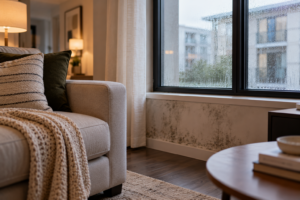
A faucet starts dripping. The air conditioner isn’t cooling like it used to. A small moisture stain appears near a window.
You tell someone from property management, the problem seems minor, and you move on.
Months later, however, the issue comes back and an important question arises: When was it first reported?
That’s when a quick conversation in the hallway or a phone call with no written record may become a problem.
During a lease, requesting maintenance isn’t just about asking someone to fix something. It’s also about creating a clear history of problems found in the apartment and the steps taken to address them.
You don’t need to turn every maintenance issue into a massive file. The goal is much simpler: document the problem, use the correct reporting channel, and keep the essential information until your lease is fully resolved.
Find Out the Official Maintenance Request Process
Before you even need a repair, find out how your property accepts maintenance requests.
Many apartment communities use a:
- resident portal;
- mobile app;
- online form;
- email address;
- phone number;
- dedicated emergency maintenance line.
Check your lease or the instructions provided by property management.
Whenever possible, use the property’s official reporting channel.
Mentioning a problem to a staff member in person may be helpful, but it doesn’t necessarily mean a work order was created.
If you report something verbally, follow up and confirm that the request was officially recorded.
Describe the Problem Clearly
“My sink is broken” doesn’t provide much useful information.
A good maintenance request explains exactly what you’re experiencing without trying to diagnose something you don’t understand.
For example:
“Water appears inside the cabinet under the kitchen sink whenever the faucet is used.”
That description explains:
- where the problem is;
- what you observed;
- when it happens.
Avoid claiming that a specific component is broken unless you’re certain.
Describe the symptoms. Let the maintenance team determine the cause.
Record the Date From the First Contact
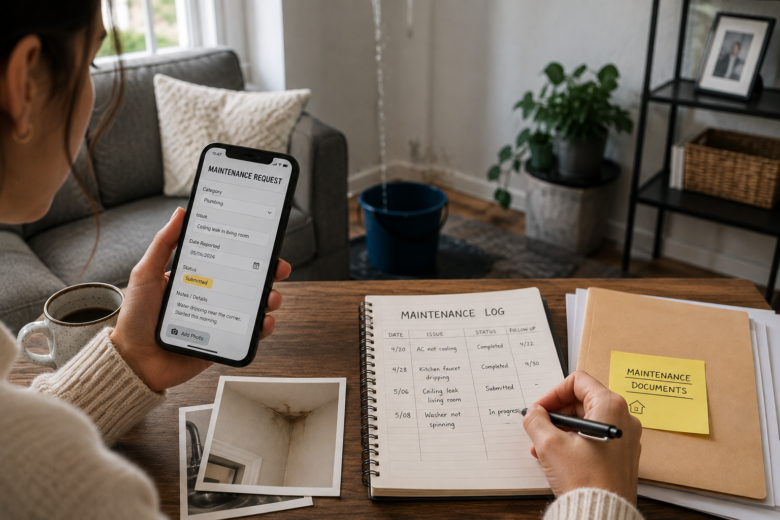
For every issue, save the date when you first noticed the problem and the date you reported it.
If the system provides a confirmation or work order number, save that too.
A simple note could look like this:
August 12 – Leak under kitchen sink – Request submitted through resident portal – Work order #4582
That already creates a much more useful timeline than trying to remember everything months later.
If the problem continues, add new information to the same record.
Photograph What Can Be Documented
Photos and videos can help show the condition at the time you submit the request.
When appropriate, document:
- leaks;
- stains;
- visible damage;
- loose components;
- changes to walls or flooring;
- appliance error messages.
For intermittent problems, a video may be more useful.
An unusual noise, for example, may disappear the moment maintenance arrives.
Don’t put yourself at risk to get a photo. Never open panels, move heavy equipment, or approach a dangerous situation just for documentation.
Create a Dedicated Maintenance Folder
Don’t leave your records scattered among photos, emails, and text messages.
Create a digital folder with a simple name such as:
Apartment Maintenance – 2026
Inside, keep:
- screenshots;
- photos;
- videos;
- emails;
- work order numbers;
- service confirmations;
- important messages.
You can also maintain a simple list with the date, issue, and current status.
Your system doesn’t need to be sophisticated.
It just needs to help you find important information quickly when you need it.
Follow Up on Requests That Remain Open
Submitting a request doesn’t mean you should completely forget about it.
If the issue hasn’t been addressed within the timeframe provided by the property, use the appropriate channel to request an update.
Keep your follow-up clear and objective.
Include the previous work order number and explain whether anything has changed.
For example:
“I’m following up on request #4582 submitted on August 12. Water is still appearing under the kitchen sink after the faucet is used.”
This keeps your communication connected to the original issue instead of starting a new story with every contact.
Record When Maintenance Is Completed
When maintenance visits your apartment, note the date.
Then observe whether the original problem appears to have been resolved.
Your record might look like this:
August 12 – Request submitted.
August 14 – Maintenance service completed.
August 16 – No additional leaking observed.
If the issue returns, you’ll have a clear record showing that it was previously addressed.
You don’t need to evaluate the technical quality of the repair.
Simply record what you observed.
Know the Difference Between Routine Maintenance and an Emergency
Not every problem should wait in the resident portal until the next business day.
Your property may have specific procedures for emergencies, such as major leaks or other conditions requiring immediate attention.
Know in advance:
- the emergency maintenance number;
- what the property considers an emergency;
- after-hours instructions.
During an emergency, prioritize your safety and follow the property’s instructions.
Once the immediate situation is under control, organize the related records.
Avoid Repairs That Aren’t Your Responsibility
When something breaks, the desire to solve the problem quickly can lead to improvising.
But taking appliances apart, changing plumbing, or attempting repairs to apartment systems may create bigger problems.
Review your lease to understand your responsibilities.
For issues that belong to the property, document and report them.
If management recommends a temporary measure, follow the instructions you receive.
Owning a toolbox doesn’t automatically make every repair the tenant’s responsibility.
Review Your Maintenance Records Periodically
Every two or three months, open your folder and check:
- which problems were reported;
- which were resolved;
- which remain open;
- whether important photos are saved;
- whether work order numbers are documented;
- whether any issue has returned.
This takes only a few minutes and keeps your records current.
Good Records Mean You Don’t Have to Rely on Memory
A lot can happen during a twelve-month lease.
You probably won’t remember in November the exact date when you first noticed a small stain back in March.
And you shouldn’t have to.
When every maintenance issue has a date, description, work order number, and basic documentation, you no longer have to rely on memory to reconstruct what happened.
That doesn’t mean turning your relationship with property management into a dispute.
Quite the opposite.
Organized communication makes it easier to explain problems, follow up on repairs, and provide a clear history if questions ever arise.
You’re still doing exactly what a renter should do when something goes wrong: reporting it.
The difference is that after you click “Submit,” you don’t let that information disappear.
You keep the record and continue living in your apartment knowing that if you need to revisit that issue months later, the entire history will be there waiting for you.