Open-concept kitchens can make small apartments feel brighter, larger, and more inviting. The problem usually appears a few minutes after you start cooking.
Dinner ends, but the smell stays.
It reaches the sofa, curtains, pillows, and depending on the apartment layout, even the bedroom. Fried foods, fish, garlic, onions, and heavily seasoned dishes can leave odors behind for hours.
In a rental, you probably aren’t planning to install a new ventilation system or make major changes to the kitchen. Fortunately, reducing cooking odors doesn’t necessarily require renovations.
The most effective approach is a simple combination: prevent odors from spreading, move odor-filled air out, and quickly clean the surfaces where grease and food particles settle.
Start Before You Turn On the Stove
The best time to control cooking odors is before they spread throughout the apartment.
Before cooking, check what ventilation options you already have.
If there’s a range hood above the stove, turn it on a few minutes before you begin and keep it running while you cook.
Some range hoods recirculate air, while others vent it outside. Either way, properly using the equipment available can help.
If there’s a nearby window and outdoor conditions allow, open it.
The goal is to create airflow before steam, grease, and odors begin spreading into the living room.
Create a Path for the Air to Escape
Opening one window can help, but creating cross-ventilation may work even better.
When possible, open another window elsewhere in the apartment to encourage airflow.
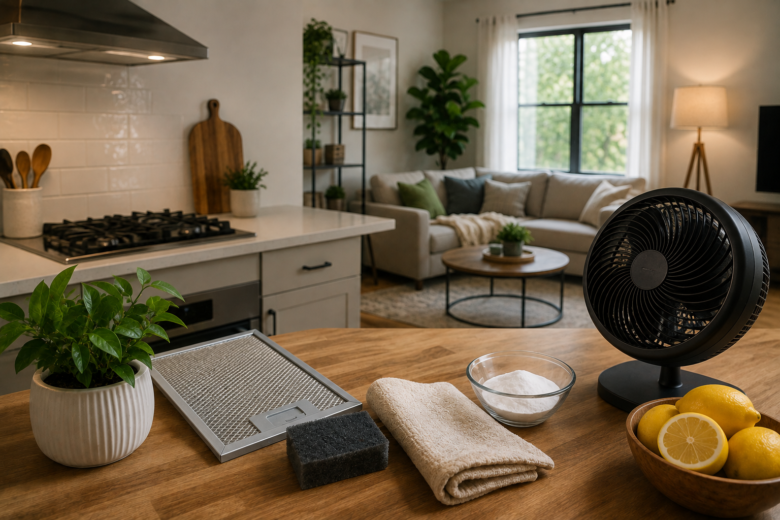
If that’s not enough, a portable fan may help.
Position it so that it encourages air to move toward an open window rather than simply pushing kitchen odors farther into the apartment.
Avoid pointing a fan toward the stove in a way that could interfere with a flame or create a cooking hazard.
The goal is to guide the air outside, not send the smell toward your sofa.
Use Lids Whenever the Recipe Allows
An uncovered pan releases steam and airborne particles directly into the room.
Whenever the recipe allows, use a lid.
This can be especially helpful for longer cooking times or foods with stronger aromas.
Also pay attention to temperature.
Overheated oil and burning food create odors that are much harder to remove.
If something spills onto the stovetop, clean it as soon as it’s safe. Continuing to heat food residue means the odor keeps being produced throughout the cooking process.
Close Off the Rooms You Can
In an open-concept kitchen, you can’t close a door between the kitchen and living room because there isn’t one.
But you can protect other areas.
Before preparing a meal with strong odors, close bedroom, closet, and bathroom doors.
This helps reduce airflow into spaces containing clothing, bedding, and other fabrics.
If coats or other clothing are hanging near the kitchen, put them away.
The fewer fabrics exposed to odor-filled air, the less likely the smell is to linger afterward.
Don’t Leave Dirty Dishes and Pans Sitting Around
Sometimes the odor that’s lingering isn’t actually in the air anymore.
It’s coming from the frying pan.
After cooking, leftover sauces, grease, oil, and food scraps continue releasing odors while sitting on the stove or in the sink.
Once you’ve finished eating, dispose of food scraps properly and wash or soak cookware as needed.
Also clean:
- the stovetop;
- countertops;
- backsplash;
- the area around your cooking surface;
- any surfaces hit by splatters.
Never mix cleaning products, and always follow the manufacturer’s instructions.
Take Care of the Trash Right Away
Trash can make it seem like your kitchen still smells like dinner hours later.
Meat packaging, fish scraps, food peels, and other strongly scented waste deserve special attention.
If the trash contains something with a strong odor, don’t leave a full bag sitting overnight.
Seal the bag properly and dispose of it according to your apartment community’s rules.
Clean the trash can periodically as well.
Changing the bag won’t completely solve the problem if liquids or food residue have collected inside the container.
Don’t Just Try to Cover Up the Smell
Lighting a scented candle or spraying air freshener immediately after cooking can create an even stronger mixture of smells.
Remove the source first.
Ventilate the apartment, wash the cookware, clean the surfaces, and take out the trash.
Only then consider adding fragrance if you want to.
Scented products can make a room feel pleasant, but they aren’t substitutes for ventilation and cleaning.
Pay Special Attention to Fabrics
Sofas, curtains, rugs, and throw pillows can absorb odors because they’re constantly exposed to the surrounding air.
That’s why controlling odors during cooking is so important.
Keep washable fabrics clean according to the manufacturer’s instructions and regularly vacuum appropriate surfaces.
If an odor remains after the kitchen itself is clean, check whether it seems to be coming from these materials.
In an open-concept apartment, the source may have left the kitchen hours ago while the odor stayed behind in the fabric.
Check Your Range Hood Filters
A range hood can become less effective when its filters are heavily coated with grease.
Check the appliance instructions or ask property management how the filters should be maintained.
In a rental, also confirm which maintenance tasks are the tenant’s responsibility.
Don’t unnecessarily disassemble equipment.
The important thing is not to ignore a visibly grease-covered filter while expecting the ventilation system to perform normally.
Create a Ten-Minute Routine After Cooking
Before relaxing after your meal, follow a quick routine:
- keep ventilation running;
- put food away;
- dispose of scraps;
- wash cookware and utensils;
- wipe down the stovetop and counters;
- check for grease splatters;
- take out strongly scented trash.
Those few minutes prevent multiple odor sources from continuing to release smells for hours.
Your Apartment Doesn’t Have to Smell Like Dinner All Night
In an open-concept kitchen, you may never completely prevent the aroma of food from reaching the living room while you’re cooking.
And that’s normal.
The real problem begins when the smell stays long after the meal is over.
Instead of trying to cover it with fragrances, work at the source: ventilate early, control the cooking process, protect other rooms, and quickly clean anything that has collected grease or food residue.
You don’t need to build walls or install a new ventilation system to notice a significant difference.
Once these small habits become part of your routine, your kitchen can stay connected to the rest of your apartment, without last night’s dinner staying connected to it until the next morning.