
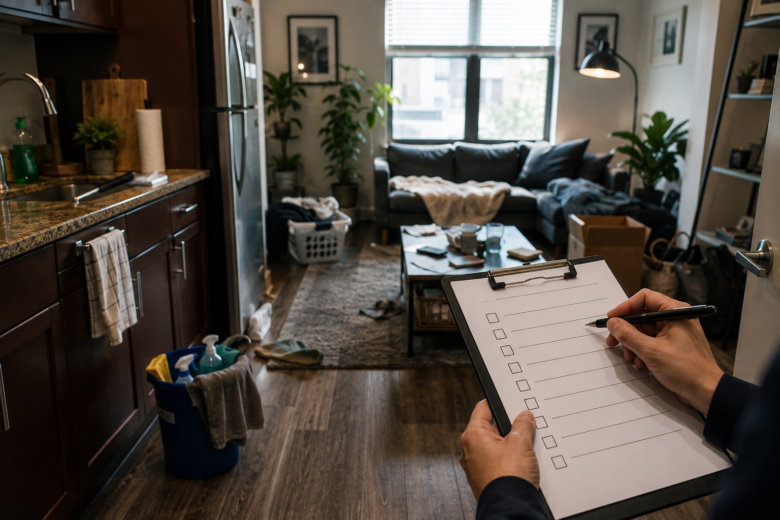
Receiving a notice that property management will be inspecting your apartment can immediately make you feel like everything needs to be spotless.
But a routine inspection shouldn’t be treated like a move-out inspection.
In many rental properties, these visits may be used to check the unit’s general condition, identify maintenance needs, inspect certain equipment, or complete procedures required by the property. The purpose, frequency, and entry requirements can vary depending on your lease and applicable laws.
That’s why the best preparation isn’t hiding every personal item or making your apartment look like a model home.
It’s about understanding the purpose of the visit, identifying real problems, and making sure important areas are accessible.
With a simple checklist, you can prepare without spending the entire day before the inspection panic-cleaning.
Read the Inspection Notice Before Doing Anything Else
Before reaching for cleaning supplies, read the entire notice from property management.
Check the:
- inspection date;
- scheduled time window;
- stated purpose;
- whether you need to be present;
- areas that may be inspected;
- instructions regarding pets;
- any property-specific requirements.
Then review your lease if you have questions about entry procedures or responsibilities.
Don’t assume the rules are the same as those at a previous apartment.
If anything is unclear, ask property management before the visit.
Walk Through the Apartment as if You Were Seeing It for the First Time
A few days before the inspection, slowly walk through every room.
Don’t look only for clutter.
Look for problems.
Check walls, floors, doors, windows, ceilings, and areas around appliances and equipment.
Ask yourself:
Is there a moisture stain anywhere?
Has a door stopped working properly?
Is a faucet dripping?
Is a property-provided appliance having problems?
Is there anything that should have already been reported to maintenance?
This walkthrough can help you notice issues that have become so familiar that you no longer pay attention to them.
Don’t Try to Hide Maintenance Problems
Did you notice a small stain on the ceiling? Is a faucet leaking? Has the dishwasher started having problems?
Don’t try to make the issue disappear just for the inspection.
Problems involving the property should be reported according to your apartment community’s procedures and the terms of your lease.
When appropriate, submit a maintenance request before the visit and keep a record of it.
This shows that the issue was identified and reported while also giving the property team an opportunity to evaluate it.
Attempting a repair that isn’t your responsibility could turn a simple problem into a larger one.
Make Important Areas and Equipment Accessible
An inspection becomes more difficult when the team needs to reach a specific area but finds boxes, furniture, or other belongings completely blocking access.
Depending on the purpose of the visit, they may need to check areas such as:
- HVAC equipment;
- the water heater, when located inside the unit;
- smoke detectors;
- areas under sinks;
- property-provided appliances;
- windows;
- doors;
- panels or other property equipment.
You don’t need to rearrange your entire apartment.
Simply keep potentially important areas accessible, especially anything specifically mentioned in the inspection notice.
Do a Normal but Strategic Cleaning
A routine inspection doesn’t necessarily mean someone will be judging whether your apartment looks perfectly decorated.
Still, basic cleaning makes it easier to see the property’s actual condition.
Prioritize:
- floors;
- countertops;
- sinks;
- the stovetop;
- bathrooms;
- areas around equipment;
- clutter that blocks important surfaces.
Take out the trash and avoid leaving food or excessive residue sitting around.
The goal isn’t to impress the property team.
It’s to make sure dirt or clutter doesn’t prevent them from identifying a real maintenance issue.
Pay Extra Attention to the Kitchen and Bathroom
Areas involving water deserve a closer look.
In the kitchen, check under the sink, around the faucet, and near appliances that use water.
In the bathroom, inspect the:
- base of the toilet;
- sink;
- bathtub or shower;
- cabinets;
- walls near wet areas.
Look for leaks, persistent moisture, stains, or changes in surfaces.
If you notice something concerning, document and report it.
Hidden water problems are exactly the type of issue that can become more serious when ignored.
Review the Rules for Pets
If you have an authorized pet in the apartment, read the inspection instructions carefully.
Property management may ask that the animal be secured, kept in another room, or otherwise controlled while staff members are inside the unit.
This helps protect both your pet and the people entering your apartment.
Even a very friendly dog can become nervous when unfamiliar people enter the home.
Plan for this ahead of time instead of trying to figure it out when someone is already knocking on the door.
Organize Personal Items Without Turning It Into a Move
You don’t need to hide every sign that someone actually lives in the apartment.
However, it’s a good idea to put away highly personal documents, medications, valuables, and other sensitive belongings from areas where people may need to walk or work.
Store them somewhere secure.
Also remove fragile objects from hallways and areas near equipment that may need to be accessed.
This keeps pathways clear and reduces the risk of accidental damage during the visit.
Document Important Conditions Before the Inspection
If there’s existing damage or a problem you’ve already reported, keep your own records.
Photograph the area and save the:
- date;
- maintenance request;
- related messages;
- responses you’ve received.
You don’t need to turn every inspection into an evidence-gathering project.
Documentation simply gives you an organized history of important property conditions and communications throughout your lease.
Use This Checklist the Night Before
Before the inspection, make sure you’ve:
- reviewed the notice and time window;
- reported maintenance problems;
- made important areas accessible;
- checked the kitchen and bathroom;
- taken out the trash;
- removed fragile objects from pathways;
- secured documents and valuables;
- made arrangements for pets;
- saved important maintenance records.
Then stop.
There’s no reason to stay up all night reorganizing drawers that probably aren’t even part of the inspection.
Inspections Are Much Easier When You Take Care of the Apartment All Year
The best preparation doesn’t begin when the inspection notice arrives.
It starts with your everyday routine.
When leaks are reported promptly, surfaces are maintained, equipment remains accessible, and problems aren’t ignored, a routine inspection stops feeling like a threat.
You don’t need to present a perfect apartment.
You simply need to understand the home you’re living in and take care of the things that are your responsibility.
That way, when property management arrives, you won’t be trying to hide months of small problems in a few hours.
You’ll simply be opening the door to an apartment that has been cared for all along, exactly as it should be.

Comments
Thank you for breaking this down step by step. It makes everything feel much easier.
Author
That’s great! I’m glad we could help!! 😉😉🙃