
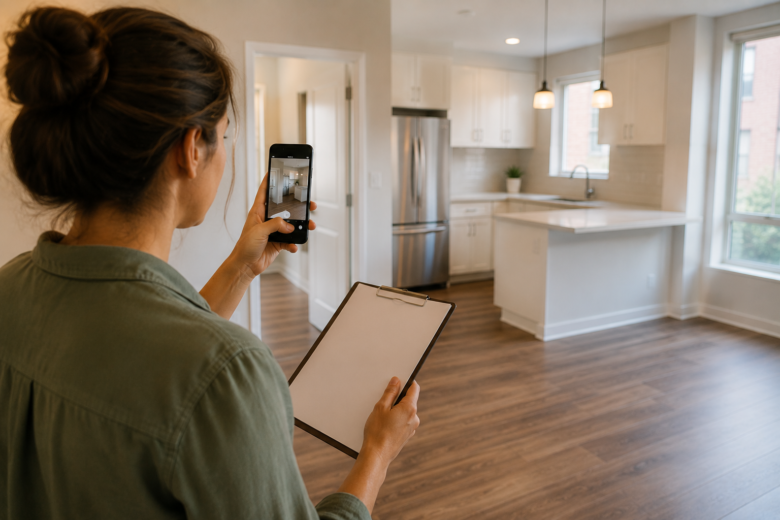
On moving day, it’s easy to notice a small mark on the wall and think, “That was already there.” The problem is that months later, proving it may be much more difficult.
A scratch on the floor, a stain on the carpet, a chipped door, or minor damage to a countertop may seem unimportant when you receive the keys. At the end of your lease, however, those same details can raise questions about when the damage occurred and who is responsible for it.
That’s where a photo inventory becomes valuable.
Creating an organized record of your apartment’s condition before furniture and moving boxes arrive takes little time and can be extremely useful when you move out.
The goal isn’t to randomly photograph every corner. It’s to create a clear, dated, and organized record of the property’s condition when you received it.
Take Photos Before You Start Moving In
The best time to create your inventory is while the apartment is still empty.
If possible, do it immediately after receiving the keys and before your furniture arrives.
With an empty apartment, you can easily photograph:
- floors;
- walls;
- doors;
- cabinets;
- countertops;
- provided appliances;
- bathrooms;
- closets;
- windows.
Once beds, sofas, and boxes are in place, some areas will become difficult to see.
If you’ve already started moving, don’t skip the inventory. Photograph everything that’s still accessible and document the remaining areas as soon as possible.
Start With Wide Photos of Every Room
Before looking for small defects, document the apartment as a whole.
Stand near the entrance of each room and take photos from several angles.
In the living room, for example, capture the walls, flooring, windows, and doors.
Do the same in bedrooms, the kitchen, bathrooms, and any other areas included in the rental.
These wide shots provide important context.
A close-up photo of a scratch may clearly show the damage, but it may not show where that scratch is located. That’s why you should combine wide photos with detailed close-ups.
Photograph Any Existing Damage
Now perform a second, much more careful inspection.
Look for:
- scratches;
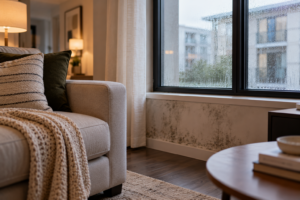
- stains;
- cracks;
- chips;
- holes;
- peeling paint;
- broken pieces;
- worn areas;
- countertop damage;
- marks on doors and cabinets.
When you find something, take at least two photos.
First, photograph the surrounding area to establish the location.
Then move closer and capture the damage in detail.
If the size of the damage matters, you can place a measuring tape nearby to provide a visual reference.
Don’t Forget Floors and Carpets
Floors deserve special attention because many areas may become hidden once your furniture arrives.
Check hardwood, laminate, or vinyl flooring for scratches, stains, raised areas, or other signs of wear.
In carpeted rooms, look for:
- stains;
- burns;
- tears;
- worn areas;
- discoloration.
Pay particular attention to places where your bed, sofa, dining table, and other heavy furniture will eventually sit.
At the end of your lease, you’ll have a record showing what those areas looked like before they were covered.
Document the Kitchen and Bathrooms in More Detail
These rooms contain many surfaces, fixtures, and appliances worth documenting individually.
In the kitchen, photograph:
- countertops;
- sink;
- faucet;
- cabinet interiors;
- doors and drawers;
- stove;
- oven;
- refrigerator;
- dishwasher, if provided.
In the bathrooms, document the sink, countertop, toilet, bathtub or shower, mirrors, and cabinets.
If an appliance or fixture already has a scratch, dent, or damaged component, take a specific photo of it.
The goal isn’t simply to prove that an appliance was present. It’s to document the condition in which it was provided.
Record a Few Short Videos Too
Photos should form the foundation of your inventory, but videos can provide additional context.
Record a slow walkthrough of the apartment.
Move through each room while showing walls, floors, doors, and major surfaces.
Avoid moving the camera too quickly.
Short videos can also document problems that are difficult to demonstrate in a photograph, such as a door that doesn’t close properly or a drawer that’s difficult to open.
Don’t replace all your photos with video. Use both formats to complement each other.
Organize the Files Immediately
Having 150 photos buried in your camera roll isn’t an organized inventory.
Create a dedicated folder with a name that’s easy to recognize, such as:
Apartment Condition – Move-In – August 2026
If necessary, create separate folders for:
- living room;
- kitchen;
- bedroom;
- bathroom;
- closets;
- appliances;
- existing damage.
Keep the original files whenever possible.
You can also save a backup in cloud storage or another secure location so you’re not relying entirely on your phone.
Match Your Photos to the Move-In Checklist
If property management provides an inspection form or move-in checklist, compare it with what you photographed.
Don’t simply mark everything as being in good condition if you found an issue.
Describe existing conditions objectively.
For example, instead of writing “bad floor,” use something specific such as:
“Scratch near bedroom door.”
If your lease or property management establishes a deadline for reporting existing damage, make sure you meet it.
Submit the information through the requested channel and keep a copy of the communication.
Keep the Inventory Throughout Your Lease
After several months, those photos may seem unnecessary.
They’re not.
Keep your inventory until your lease has completely ended and any questions regarding the apartment’s condition have been resolved.
It’s also useful to document significant issues that occur during your tenancy, especially when they’re reported to maintenance.
This helps create a clearer timeline of the property’s condition.
Photo Inventory Checklist
Before you’re finished, make sure you’ve documented:
- every room;
- walls and floors;
- carpets;
- doors and windows;
- closets and cabinets;
- kitchen and bathrooms;
- provided appliances;
- pre-existing damage;
- wide shots and close-ups;
- short videos when necessary;
- organized and backed-up files;
- problems reported within any required deadline.
The Photos That Feel Excessive Today May Matter Later
On your first day, you probably want to start setting up your home, not spend an hour photographing baseboards and doors.
But your apartment will never be easier to document than it is before you move in.
Months later, your memory won’t be a reliable record of every small scratch that was already there.
Your photos will be.
Create the inventory once, organize the files, and keep everything.
You may never need those images to resolve a disagreement, and that’s the best-case scenario.
But if a question comes up at the end of your lease, you won’t have to rely on memories or arguments about what the apartment looked like.
You’ll have a record created before the very first moving box came through the door.


Comments
I’m currently making a moving checklist and just added a few things from this post.
Author
So happy this helped! Moving can be stressful, so I try to make these guides as practical as possible. 🙂