You found an apartment that seems perfect. The location is great, the rent fits your budget, and every room looks exactly the way you imagined. The tour ends, you leave excited, and you’re already thinking about where your furniture will go.
But there’s one detail many people forget to check, one that can turn your daily routine into a constant frustration: water pressure.
Imagine waking up to take a shower before work only to discover that the shower barely has enough pressure to rinse out shampoo. Or trying to wash dishes while the kitchen faucet delivers nothing more than a weak trickle of water. These problems may seem minor during a short apartment tour, but they become a daily inconvenience once you move in.
The good news is that you don’t need to be a plumber or carry any special tools to spot signs of poor water pressure. With a few simple checks, you can learn a lot about an apartment’s plumbing system before signing the lease.
Why Water Pressure Deserves Your Attention
When touring an apartment, most people focus on the location, layout, natural light, and finishes. The plumbing system rarely gets much attention.
The problem is that poor water pressure can affect almost every part of your daily routine, including:
- taking a shower;
- doing laundry;
- washing dishes;
- brushing your teeth;
- filling pots for cooking;
- cleaning your apartment.
Beyond the inconvenience, low water pressure may also point to larger issues, such as aging pipes, faulty valves, hidden leaks, or problems with the building’s water supply.
That’s why spending just five minutes checking something so important can save you from months of frustration later.
Start With the Kitchen Faucet
The kitchen is one of the best places to begin.
Turn the faucet on all the way and pay attention to:
- the strength of the water flow;
- whether the stream stays consistent;
- how quickly the water reaches full pressure.
If the water comes out weak, fluctuates, or loses pressure after a few seconds, it may be a sign that something needs further investigation.
While the water is running, listen carefully for unusual sounds such as whistling or vibrating pipes.
Repeat the Test in Every Bathroom
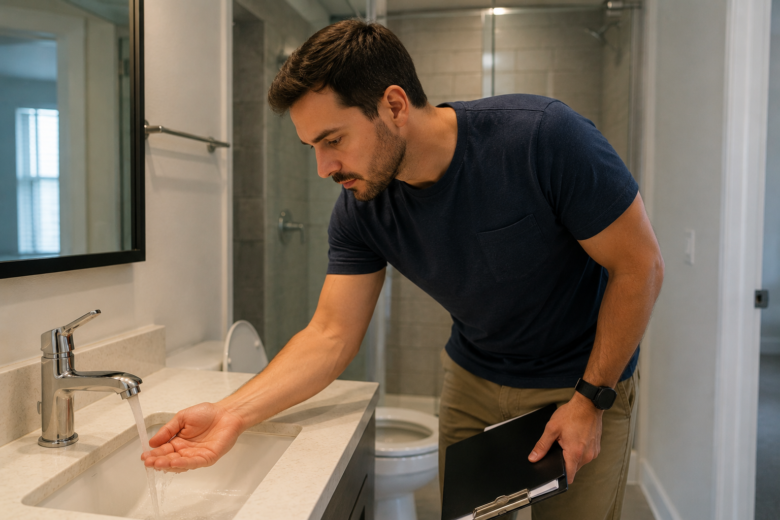
Next, repeat the same process in each bathroom.
Turn on the sink faucet.
Then test the shower.
Finally, flush the toilet.
Your goal isn’t simply to see whether water comes out, it’s to make sure every fixture performs consistently.
If one bathroom behaves very differently from another, it’s worth asking why.
Check How Long It Takes for Hot Water to Arrive
If the apartment has hot water, don’t skip this step.
Turn on only the hot water.
Count approximately how long it takes before it becomes warm.
A short wait is completely normal.
However, waiting several minutes every time you need hot water may mean wasted water and a less efficient plumbing system.
Test Two Water Fixtures at the Same Time
This simple test can reveal a lot. Ask for permission to leave the kitchen faucet running while you turn on the bathroom sink faucet.
Watch to see if:
- the water pressure drops significantly;
- the flow becomes inconsistent;
- the water nearly stops running.
A properly functioning plumbing system may experience slight changes, but dramatic drops in pressure deserve attention.
Pay Close Attention to the Toilet Flush
Most people flush the toilet just to make sure it works. Take it one step further.
Notice:
- whether the flush is strong enough;
- how long it takes for the tank to refill;
- whether you hear running water long after flushing;
- whether there are signs of leaks around the tank.
These details may point to maintenance issues or unnecessary water waste.
Look for Signs of Previous Plumbing Problems
Even if the water pressure seems good, inspect the apartment carefully.
Look for:
- water stains;
- peeling paint;
- swollen cabinets under the sink;
- dark or moldy caulk;
- areas that appear to have been recently repaired.
These signs don’t necessarily mean there’s a current problem, but they may suggest the apartment has experienced water-related issues in the past.
Ask About Water Supply Issues
Not every water pressure problem originates inside the apartment.
Some buildings experience lower pressure during peak usage hours.
Ask simple questions like:
- Does the water pressure drop at certain times of the day?
- Have residents reported water supply issues?
- Does the building use a booster pump?
- Is the water system designed to handle all the apartments efficiently?
The answers may reveal valuable information that isn’t obvious during a single tour.
Talk to a Current Resident If You Have the Chance
This is one of the quickest ways to confirm your observations.
If you see someone in the hallway, parking garage, or common areas, politely ask:
“How’s the water pressure here?”
People who actually live in the building know far more about daily life than any apartment listing ever will.
In just a few minutes, you may learn about recurring plumbing issues, water outages, or pressure problems on certain floors.
Use This Checklist Before Making Your Decision
Before signing the lease, make sure you’ve:
✔ Tested every faucet in the apartment.
✔ Turned on the shower and checked the water pressure.
✔ Flushed each toilet at least once.
✔ Timed how long it took for the hot water to arrive.
✔ Tested two water fixtures at the same time.
✔ Looked for signs of moisture or previous leaks.
✔ Asked about fluctuations in the building’s water supply.
✔ Spoken with a current resident whenever possible.
Spending just a few extra minutes on these checks can save you from months of inconvenience after you move in.
Five Minutes of Attention Can Save You Months of Frustration
During an apartment tour, it’s easy to be impressed by a beautiful kitchen, brand-new flooring, or a great view. Water pressure, however, usually doesn’t become important until you’re living there and relying on it every single day.
That’s exactly why so many renters discover this issue too late.
Before signing any lease, remember that you’re not simply choosing an apartment. You’re choosing the place where you’ll shower every morning, cook your meals, do your laundry, and live your everyday life.
The details that seem minor during a tour are often the ones that have the biggest impact after move-in. Taking a few minutes to test the water pressure today could be one of the smartest decisions you make before calling that apartment home.